
10 baby names inspired by Lord Krishna

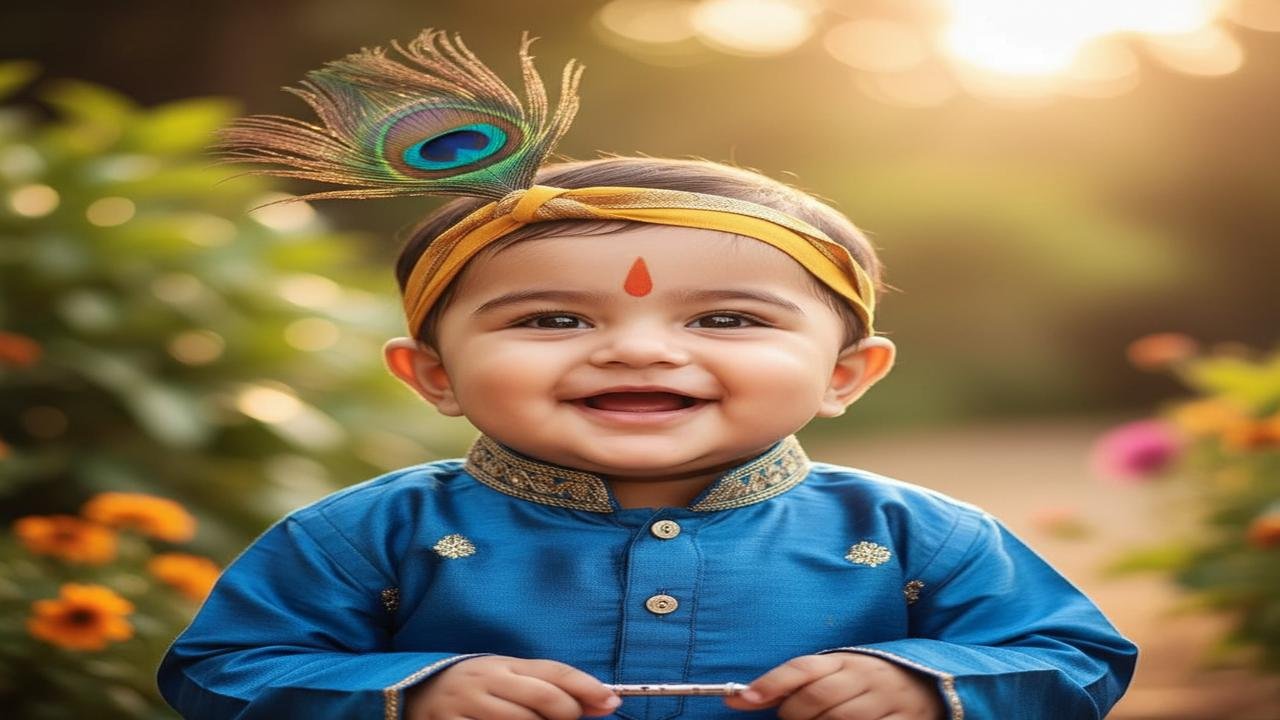
Introduction
Choosing a baby name inspired by Lord Krishna can connect a child to a long devotional and literary tradition. Krishna is a central figure in many Hindu schools, described as an avatara (incarnation) of Vishnu in texts such as the Bhagavata Purana (especially the 10th Canto) and the Mahabharata. Different communities emphasise different aspects — the playful child, the compassionate friend, the divine lover, or the teacher of the Gita — so names drawn from Krishna’s many epithets carry varied meanings and connotations. Below are ten names commonly used in India, with meanings, roots, textual and cultural notes, and simple pronunciation guides. Where traditions diverge, that is noted.
Choosing a name: practical notes
- Consider how the name sounds with your family name and whether you prefer a devotional, classical Sanskrit, or colloquial form.
- Some families consult the child’s natal chart and a priest for an auspicious syllable or nakshatra (lunar mansion); others follow regional or family traditions.
- If you mark Krishna festivals such as Janmashtami (which falls on the Ashtami tithi of Bhadrapada, usually in August–September), be mindful that devotional practices may include fasting — if you have health concerns, consult a doctor.
10 baby names inspired by Lord Krishna
-
Govinda — Pronunciation: goh-ˈvin-da
Meaning and root: From go (cow) + vinda (one who finds/protects); often translated as “protector of cows” or “one who gives pleasure to the senses.”
Text and use: A popular name in bhakti songs and in the Bhagavata Purana. Widely used across North India; strongly devotional and distinctly Vaishnava in tone. -
Gopala — Pronunciation: go-ˈpah-la
Meaning and root: Literally “cowherd” or “protector of cows” (go + pāla). Conveys the pastoral, childhood aspect of Krishna as a shepherd-boy.
Text and use: Frequent in Puranic stories of Krishna’s youth among the gopis and cows; common in south and east Indian naming. -
Keshava — Pronunciation: keh-ˈsha-va
Meaning and root: Multiple senses—“having beautiful hair,” and in tradition also “the slayer of the demon Keshi.”
Text and use: Listed among the names in the Vishnu Sahasranama and used by commentators on the Gita. Classical and respected; used across liturgical contexts. -
Vasudeva — Pronunciation: va-su-ˈde-va
Meaning and root: Patronymic “son of Vasudeva”; also used as a theonym for Krishna himself in many Puranic and epical contexts.
Text and use: Prominent in the Mahabharata and the Puranas. Strong, formal name often chosen for its clear scriptural link. -
Damodara — Pronunciation: da-mo-ˈda-ra
Meaning and root: “One who was bound around the belly” (da — rope; udara — belly), recalling the well-known episode where Yashoda binds young Krishna.
Text and use: The tale appears in the 10th Canto of the Bhagavata Purana and is a favourite in devotional practice. The name carries tenderness and childhood imagery. -
Mukunda — Pronunciation: mu-ˈkun-da
Meaning and root: “Giver of liberation” (mukta — liberated; dā — giver). Emphasises the salvific role of the divine.
Text and use: Found among classical lists of Vishnu/Krishna names; used widely in devotional contexts, especially where the emphasis is on grace and liberation. -
Mohan / Mohana — Pronunciation: mo-ˈhan / mo-ˈha-na
Meaning and root: “Enchanter” or “one who attracts/entices.” Mohan (masculine) and Mohana (feminine) refer to Krishna’s captivating beauty and charm.
Text and use: Common in bhajans and poetry. Mohana is frequently used for girls; Mohan is a familiar male name across regions. -
Madhava — Pronunciation: ma-ˈdha-va
Meaning and root: Multiple layers—“descendant of Madhu,” “one of the spring,” or “honey-like”; often associated with Krishna and Vishnu.
Text and use: Classical name found in devotional poetry and Purāṇic lists. Has a lyrical, seasonal quality and is used in many Indian languages. -
Shyam / Shyama — Pronunciation: shyam / shyah-ma
Meaning and root: “Dark” or “blue/black”—a reference to Krishna’s complexion; Shyam is typically masculine, Shyama feminine.
Text and use: Extremely popular across India; evokes the colour imagery often used by poets and devotees when describing Krishna. -
Radhika (Radha) — Pronunciation: rah-dhee-ka / rah-dha
Meaning and root: “Beloved” or “adored one”; Radha is the principal gopi associated with Krishna’s pastimes.
Text and use: Especially central in Gaudiya, Vallabha, and other bhakti traditions that focus on Krishna–Radha devotion. While Radha is a name for a woman, Radhika is a lovingly embellished form used widely.
Final thoughts
Each name above highlights a different facet of Krishna — pastoral guardian, playful child, enchanter, teacher, or beloved — and choices may reflect regional language, family tradition, or devotional orientation. In some communities, the same name carries additional local forms (for example, Govinda becomes Govind, Gopal, or Gobind). If a formal naming ceremony (namakarana) is planned, families often consult elders or a priest; many also simply pick a name that feels right and has a loving meaning. Whatever you choose, a name inspired by Krishna links a child to a rich body of stories, poetry, and living practice across India.
