
10 Baby Names Inspired by the Sacred City of Varanasi (Kashi)

Introduction
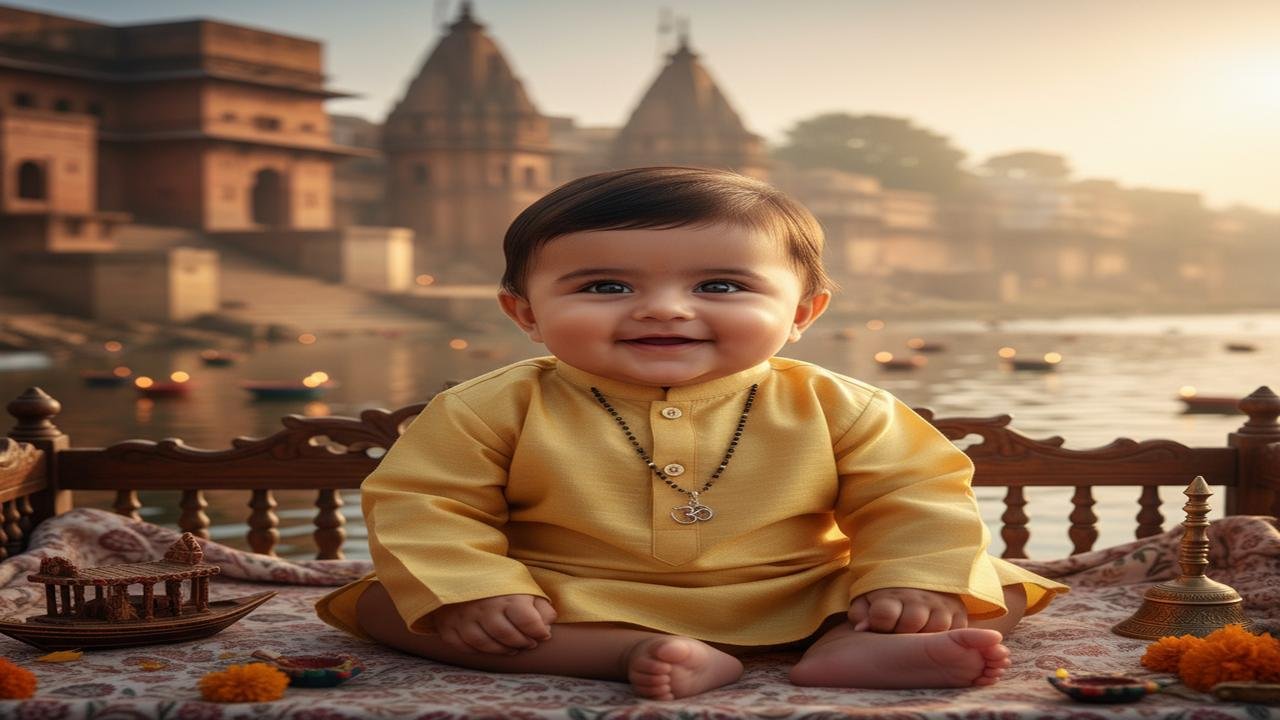
Kashi (Kāśī) — the ancient city on the banks of the Ganga — has shaped Hindu thought, ritual, poetry and pilgrimage for millennia. Sacred texts such as the Skanda Purana (the Kashi Khaṇḍa) and countless devotional hymns celebrate its ghats, temples and deities. Names drawn from Kashi’s geography, gods and living traditions carry layered meanings: spiritual aspiration, local memory and literary resonance. Below are ten baby-name ideas inspired by Varanasi, with meanings, associations and practical notes.
How to read these suggestions
- Gender labels are conventional; many names work across genders in modern usage.
- Meaning gives a literal gloss; theological or local associations are noted where relevant.
- When a sacred practice or belief is mentioned, phrasing indicates diversity of opinion (for example, “some traditions hold…”).
- If a name is closely associated with a deity, families sometimes add a suffix (–nath, –esh) or use a diminutive; consider family custom before final choice.
1. Kashi (Kāśī)
Meaning: “The luminous” or “city of light.”
Gender: Unisex.
Notes: The city’s traditional name; used as a personal name to evoke refuge, learning and light. Skanda Purana and many pilgrims’ accounts praise Kashi’s salvific qualities. As a direct place-name, it is instantly recognizable and concise.
2. Vishvanath (Viśvanātha)
Meaning: “Lord of the universe.”
Gender: Traditionally masculine.
Notes: The principal name of Shiva worshipped at the Kashi Vishwanath temple. In Śaiva sources the epithet emphasizes Shiva’s universal lordship; in popular devotion it signals attachment to Kashi itself. Short forms: Vishu, Nath.
3. Annapurna (Annapūrṇā)
Meaning: “One who fills with food” (provider of nourishment).
Gender: Feminine.
Notes: The goddess whose temple in Kashi is an important local shrine. The name connotes generosity, household sustenance and ritual hospitality. In temple lore and devotional poetry, Annapurna’s blessings are associated with both material and symbolic nourishment.
4. Ganga
Meaning: Name of the river Ganges; the river-goddess herself.
Gender: Feminine.
Notes: The Ganga is the lifeline of Varanasi—religious, social and cultural. Naming a child Ganga invokes purity, journey and continuity. Be mindful that the river carries both sacred reverence and contemporary environmental concerns; the name is evocative and widely used.
5. Manikarnika (Manikārṇikā)
Meaning: “Jewel (mani) and ear (karṇa)” — linked to a local legend.
Gender: Traditionally feminine.
Notes: Manikarnika Ghat is one of Varanasi’s most famous sites. The name is strong and historic (Rani Lakshmibai’s birth name was Manikarnika). It carries deep cultural weight—associated with cremation rites for some and with legends of Shiva and Parvati for others—so families often consider the connotations carefully.
6. Assi (Aśī)
Meaning: Named after Assi Ghat; etymologies vary locally.
Gender: Unisex (leaning feminine in modern use).
Notes: Short, modern-sounding and unmistakably local. Assi Ghat is where the Assi River joins the Ganga and is a lively site for pilgrims and students. The name suits parents seeking a clear Varanasi connection without a deity-specific label.
7. Harishchandra
Meaning: “King who is like the moon (chandra), protector of righteousness.”
Gender: Masculine.
Notes: The legendary king Harishchandra appears in Purāṇic stories and has a ghat named after him in Varanasi. The name carries ideals of truthfulness and sacrifice as portrayed in epic and folk traditions. It is classical and formal; common diminutives include Hari or Chandra.
8. Mochan
Meaning: “Liberator” or “one who releases” (from troubles).
Gender: Unisex.
Notes: Associated with the Sankat Mochan temple in Varanasi (a Hanuman shrine). In devotional contexts, “mochan” denotes relief from suffering. As a personal name it is short and devotional without being a direct deity-name. Consider local pronunciation (Mo-chan) when choosing a nickname.
9. Moksha
Meaning: “Liberation” or spiritual release.
Gender: Unisex (more commonly feminine in contemporary usage).
Notes: Kashi is traditionally linked with the aspiration for moksha — liberation from the cycle of rebirth — a belief found in several classical texts and popular traditions. Phrase cautiously: “Some traditions hold that dying in Kashi confers moksha.” As a given name, Moksha signals deep spiritual yearning; discussions in the family about religious resonance are recommended.
10. Vidya
Meaning: “Knowledge, learning.”
Gender: Traditionally feminine.
Notes: Varanasi has been a centre of Sanskrit learning, philosophy and arts for centuries; Banaras Hindu University is a modern continuation of that association. Vidya honors scholarship and study without invoking a single sectarian identity. Short forms: Vid, Vidi.
Practical notes for parents
- Many families consult elders, astrologers or community traditions before finalising a name. Practices vary across regions and castes—there is no single rule.
- If you choose a theophoric name (one derived from a deity), consider whether you want it used as a casual nickname; some names are treated more reverentially in certain households.
- Pronunciation matters: when a Sanskrit form is used locally, ask family members for the preferred pronunciation and spelling.
- For naming ceremonies (namakarana), timings differ—many perform it within a few days to weeks after birth; customs vary by community.
Closing thought: Names from Kashi offer a poetic link to place, ritual and scripture. Whether you choose a river-name like Ganga, a temple name such as Vishvanath, or an abstract ideal like Moksha or Vidya, these options carry layers of history and meaning—suitable for families seeking a name rooted in living tradition.
