
10 Indian baby names inspired by gemstones

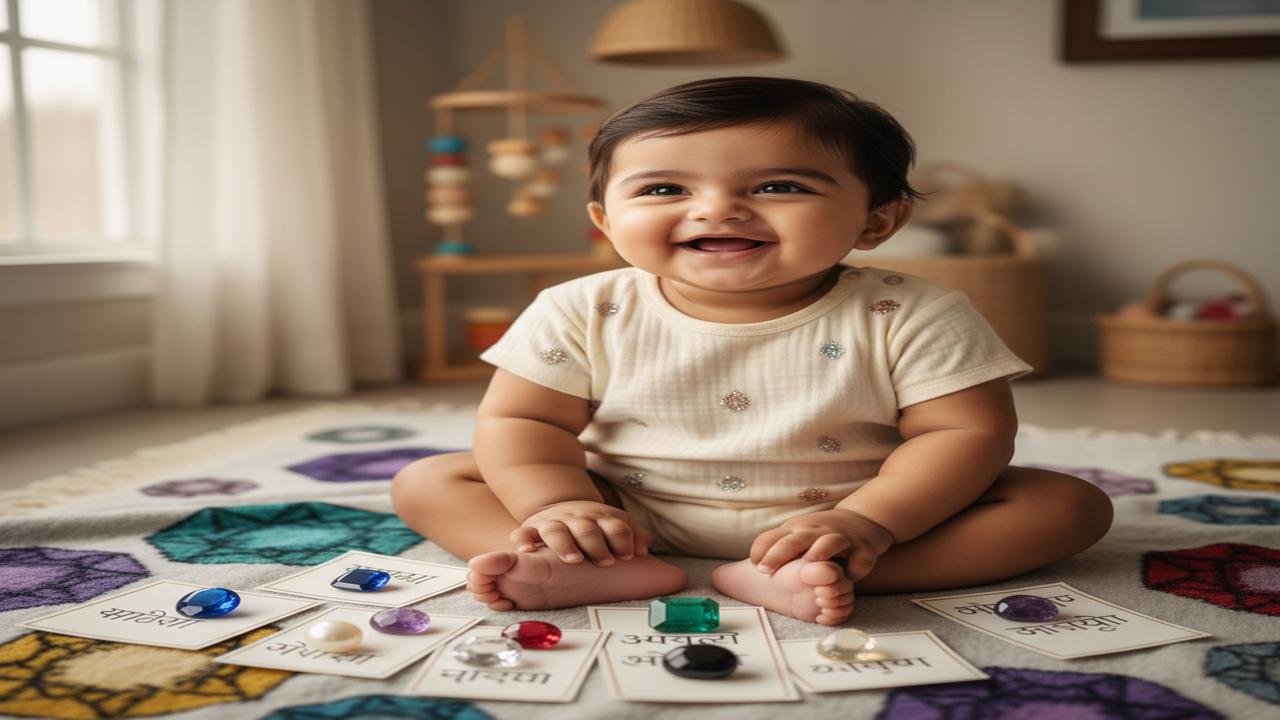
Why gemstones (ratna — jewel) matter in Hindu culture
Gemstones — ratna in Sanskrit — have long been part of South Asian religious life: jewellery, temple ornament, royal insignia and astrological remedies. The classical navarātra (nine gems) system links specific stones to planetary powers in jyotiṣa (Hindu astrology), while purāṇic and poetic literature use jewels as metaphors for virtues and the divine. Interpretations differ across traditions (Śaiva, Vaiṣṇava, Śākta, Smārta and local practices), so a name inspired by a gem can carry aesthetic, devotional or astrological resonances depending on family preference.
10 Indian baby names inspired by gemstones
-
Mani (मणि) — “jewel” (unisex)
Maṇi simply means “jewel” or “bead.” It appears widely in Sanskrit compounds (for example, cintāmaṇi, the wish-fulfilling jewel). As a name, Mani is short, versatile and pan-Indian. In devotional poetry the maṇi can symbolise the inner heart or a devotee’s treasured virtue.
Notes: common across languages; easy pronunciation: MAH-nee.
-
Manik / Manikya (माणिक / माणिक्य) — “ruby” (m/f)
Maṇikya indicates the ruby, traditionally associated with the Sun in jyotiṣa. Classic Sanskrit and medieval Indian gems literature discusses the ruby’s colour and hardness. As a personal name it evokes warmth, dignity and princely brilliance.
Notes: Manik is common in Bengali, Gujarati and Marathi contexts.
-
Neela / Neelam (नील / नीलम) — “blue / sapphire” (f/m)
Nīla means “blue”; nīlam is used for blue sapphire. Shiva is often described as nīlakaṇṭha (blue-throated), making blue an important colour in Śaiva imagery. In astrology blue sapphire is linked to Saturn (Śani) and carries complex, debated meanings among astrologers.
Notes: Neela/Neelam is melodious and familiar across India.
-
Marakata (मरकत) — “emerald” (unisex)
Marakata is the classical Sanskrit term for emerald, often praised in poetry for its green depth. Green is associated with growth, learning and the vegetal world in Indian aesthetics, and marakata appears in classical descriptions of royal necklaces and divine ornaments.
Notes: A slightly literary choice; pronounce MAH-rah-kut-ah / MAH-rah-kah.
-
Panna (पन्ना) — “emerald / green stone” (f)
Pannā is the common Hindi/Urdu name for emerald and is used as a given name, typically for girls. It carries the same green, spring-like connotations and is easy to use in modern settings.
Notes: Panna is familiar and widely accepted across linguistic regions.
-
Ratna (रत्न) — “gem, treasure” (unisex)
Ratna means “gem” and is a classic Sanskrit name element (Ratna-). It appears in literary and religious contexts (for example, “ratna” as a symbol of spiritual gifts). Compound names like Ratnakar, Ratnesh or Ratnamala build on this root.
Notes: A dignified, neutral choice that reads both spiritual and cultural.
-
Mukta (मुक्ता) — “pearl”; also “liberated” (unisex)
Muktā is used for “pearl” in classical texts; the same phonetic form evokes mukti — liberation — so the name carries layered meanings. Pearls are associated with the Moon in astrological systems, and with purity in devotional images.
Notes: Mukta can appeal for both its literal and spiritual resonance. Pronunciation: MOOK-tah.
-
Praval (प्रवाल) / Pravala — “coral” (m/f)
Pravāla is the Sanskrit word for coral. Coral figures in temple ornamentation and Ayurvedic materia medica; in jyotiṣa red coral is associated with Mars. As a name it suggests vivid colour, resilience and seaside imagery.
Notes: Praval (male) and Pravala (female) both work well in many Indian languages.
-
Hiranya (हिरण्य) — “gold” (unisex)
Hiraṇya literally means “gold.” It appears in the cosmological epithet Hiraṇyagarbha (the golden womb) in the Vedas and Upaniṣads. Gold is a central symbol of purity, wealth and sacrificial value in many Hindu rites and texts.
Notes: Hiranya feels ancient and philosophical; variants include Hirank and Hiranya.
-
Vajra (वज्र) — “diamond, thunderbolt” (m)
Vajra in Sanskrit denotes both the diamond-like hardness and the thunderbolt weapon of Indra. In some textual uses it carries a sense of indestructibility and decisive power; the term is also central in Buddhist tantric vocabulary. As a name, Vajra is bold and evocative.
Notes: Pronounce VUH-jra or VAJ-ra depending on vernacular; consider the strong symbolic load in religious contexts.
Practical considerations and cultural notes
Choosing a gemstone-inspired name can be aesthetic, devotional or astrologically motivated. Families often weigh linguistic fit, regional pronunciation, and how a name appears in ritual or temple contexts. Some points to keep in mind:
- Meaning layers: Many Sanskrit words have multiple senses (e.g., Mukta = pearl and also liberated); discuss meanings with elders if spiritual nuance matters.
- Astrological advice: If choosing a name by nakshatra or linking it to a planet’s gem, practices vary widely; consult a trusted family astrologer or priest for specifics rather than general online lists.
- Scriptural echoes: Names like Vajra, Hiranya or Mani have appearances in Vedic, Purāṇic or tantric literature; be aware that different traditions read those terms in different ways.
- Pronunciation & spelling: Spellings vary across scripts and languages—consider a spelling that will work in your child’s likely schooling and community.
- Ritual wearing of gems: If considering wearing gemstones for ritual or astrological reasons, seek specialist guidance; gemstones are not substitutes for medical or professional advice.
Gemstone-inspired names combine visual beauty with deep cultural resonances. Whether chosen for sound, meaning or lineage, they often serve as a small, lifelong symbol linking a child to language, ritual and poetic imagination.
