
10 Indian baby names inspired by harvest festivals

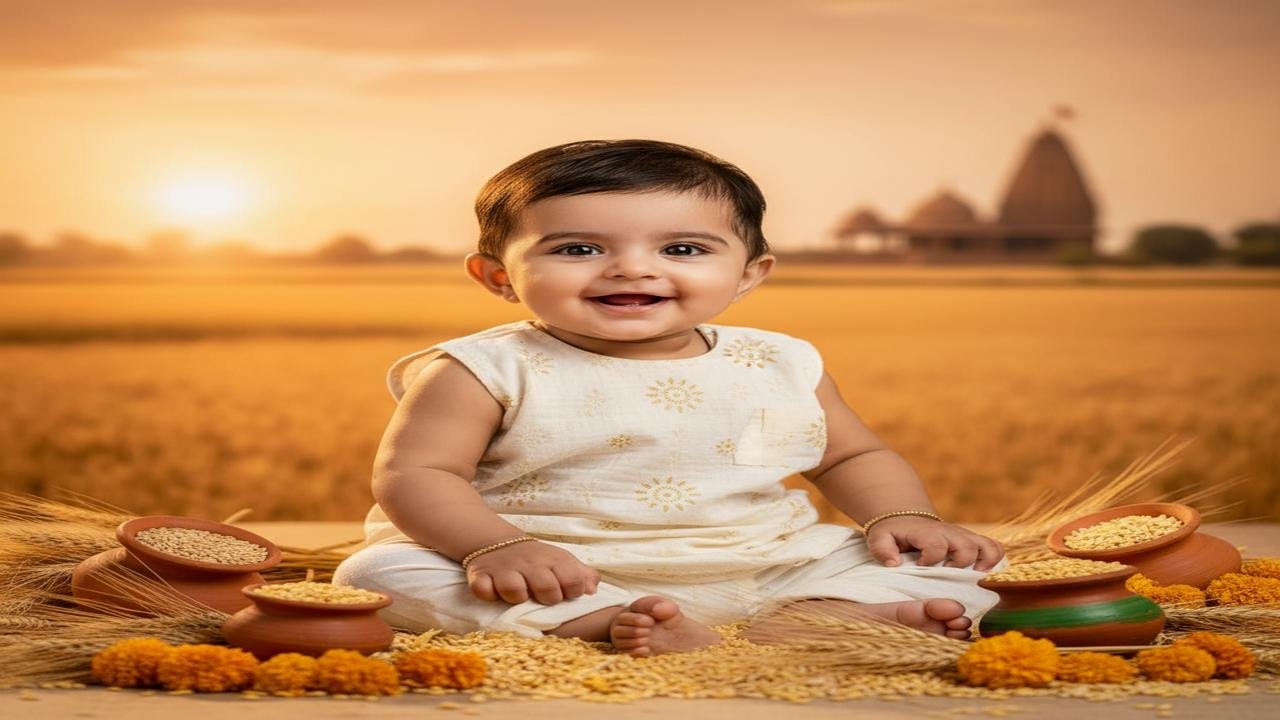
Harvest festivals across India—Pongal, Makar Sankranti, Baisakhi, Onam, Nabanna, Nuakhai and others—mark gratitude for the new grain, the sun, the earth and community labour. Choosing a baby name inspired by these festivals can honour that seasonal memory: the new crop, the dawn sun, the goddess who feeds, or the green field. This guide offers ten names tied to harvest themes, with meanings, festival links, linguistic roots and a few practical notes. I also note interpretive diversity: local customs, temple traditions and textual references vary by region and school (Śaiva, Vaiṣṇava, Śākta, Smārta, Sikh, folk), so families often combine custom, astrology and personal taste when naming.
Quick glossary on first use: tithi — lunar date; puja — worship ritual.
-
1. Dhanya (धन्य)
- Meaning: “grain; blessed, fortunate.”
- Festival link: Evokes the newly harvested rice or paddy central to Pongal, Nabanna and Onam thanksgiving rites.
- Root/deity link: From Sanskrit dhanya (grain). Classical texts use the word for staple crops; poets celebrate the “dhanya” of fertile fields.
- Gender: Usually feminine or unisex. Nicknames: Dhani.
Dhanya is simple and directly agricultural—suitable for families who want a name that literally honours the harvest.
-
2. Annapurna (अन्नपूर्णा)
- Meaning: “She who is full of food”; provider of nourishment.
- Festival link: Resonates with harvest feasts and rice-offerings. Annapurna is especially celebrated in some winter temple rites and household pujas after harvest.
- Root/deity link: In Shakta traditions Annapurna is an aspect of Pārvatī who feeds the world; Vaishnava and Smārta families may also honour the same figure as a giver of sustenance.
- Gender: Feminine. Nicknames: Annu, Purna, Anapa.
As a theological name it carries devotional overtones; families often choose it to express gratitude for food and hospitality.
-
3. Vasant / Vasanthi (वसन्त / वसन्ती)
- Meaning: “Spring; the season.”
- Festival link: Linked to Baisakhi (Vaisakhi) and Holi, which sit in the spring/time of rabi-harvest celebrations; also to Vasant Panchami, a seasonal observance.
- Root/deity link: Classical Sanskrit season name vasanta. Poets and liturgy celebrate Vasant as a time of renewal.
- Gender: Vasant (male), Vasanthi/Vasantha (female). Nicknames: Vasu, Vani.
Works well if you want a name that evokes seasonal abundance and renewal rather than a specific crop.
-
4. Vaishakh / Vaishakha (वैशाख)
- Meaning: The lunar month Vaisakha (around April–May).
- Festival link: Direct association with Baisakhi/Vaisakhi (usually 13–14 April), the Punjabi harvest and new-year observance.
- Root/deity link: Month-name used across calendars; in Sikh tradition Vaisakhi has historical significance as well as agrarian meaning.
- Gender: Unisex. Nicknames: Vai, Asha.
Picking a month-name is traditional in many Indian communities; it highlights the time of year rather than a theological attribute.
-
5. Makara (मकर)
- Meaning: “Capricorn; the sea-creature” (astral/mythic form).
- Festival link: Makar Sankranti (mid‑January), a solar festival when the sun moves into Makara — widely observed as a harvest and sun-thanksgiving day.
- Root/deity link: Makara appears in temple iconography and as a Vahana (mythic creature). The sun (Sūrya) is central to Makar Sankranti rituals.
- Gender: Mostly masculine. Nicknames: Mak.
Makara carries a strong solar and temple-image resonance; it’s subtle and symbolic rather than overtly agrarian.
-
6. Harit / Haritha (हरित)
- Meaning: “Green, verdant.”
- Festival link: Suggests the green fields after planting and the lushness celebrated at Onam, Magh Bihu and Nabanna.
- Root/deity link: From Sanskrit harita, used in classical poetry for fresh vegetation; also resonates with earth- and fertility-worship.
- Gender: Harit (male), Haritha (female). Nicknames: Hari (also a name of Viṣṇu; be mindful of overlap).
Green-themed names are gentle, poetic choices that fit an agrarian ethos.
-
7. Nava / Navin / Navina (नव / नवीन)
- Meaning: “New, fresh.”
- Festival link: Resonates with “new rice” celebrations such as Nabanna (Bengal) and Nuakhai (Odisha/Chhattisgarh), where the first grain of the season is offered and eaten.
- Root/deity link: Classical Sanskrit root nava for newness; used widely as a name element.
- Gender: Nava/Navin (male), Navina (female). Nicknames: Nav.
Name choice emphasises renewal—the fresh grain, the new year, new beginnings.
-
8. Surya / Suryansh (सूर्य / सूर्यांश)
- Meaning: “Sun” / “a part of the Sun.”
- Festival link: Makar Sankranti and Pongal are fundamentally solar festivals; Pongal includes explicit offerings to Sūrya in Tamil practice.
- Root/deity link: Vedic hymns celebrate Surya; temple and folk traditions across schools venerate the sun for crop ripening.
- Gender: Surya (male), Suryansh (unisex). Nicknames: Sur, Sunny.
Solar names connect the child to the life-giving principle widely honoured at harvest time.
-
9. Annada (अन्नदा)
- Meaning: “Giver of food.”
- Festival link: Suitable for regions where the harvest is dedicated to deities or offered at household shrines—the personification of bounty.
- Root/deity link: Close in sense to Annapurna; used in vernacular devotional poetry and temple contexts.
- Gender: Feminine. Nicknames: Anna, Daa.
Annada emphasises the social and ritual importance of sharing the harvest.
-
10. Bhumi (भूमि)
- Meaning: “Earth; soil.”
- Festival link: The harvest is ultimately an offering of the Earth’s yield; Bhumi invokes that grounding force celebrated at many regional festivals.
- Root/deity link: Bhumi Devi appears in Vaishnava contexts and as a mother-earth figure in folk practice; reverence for Bhumi spans sects.
- Gender: Feminine. Nicknames: Bhoomi, Bhu.
Bhumi is elemental and devotional—a name that keeps the child connected to the land.
Choosing a name: families often weigh sound, meaning, regional pronunciation, astrology (nakshatra, tithi) and ancestral usage. If you want a ritual tie, note the festival timing: Makar Sankranti and Pongal are mid‑January on the solar calendar, Vaisakhi is on 13–14 April, Onam is late August–September (Chingam), Nabanna and Nuakhai follow local harvests (usually post-monsoon). Religious texts and local temple calendars can differ; for ceremonial naming, many consult a family priest, pandit or community elder who respects their tradition.
Practical note: some harvest observances include fasting or extended rituals; if a practice might affect health (for example prolonged fasting), consult a medical professional.
Across India, harvest names can be both devotional and domestic, poetic and practical. They carry gratitude—to the sun, soil, seed and community—and can be adapted with regional endings and nicknames. The ten suggestions above aim to offer a mix of classical Sanskrit roots, festival-season names and devotional references so families from different traditions can find a respectful, grounded option.
