
10 modern-sounding baby boy names inspired by Lord Ayyappa

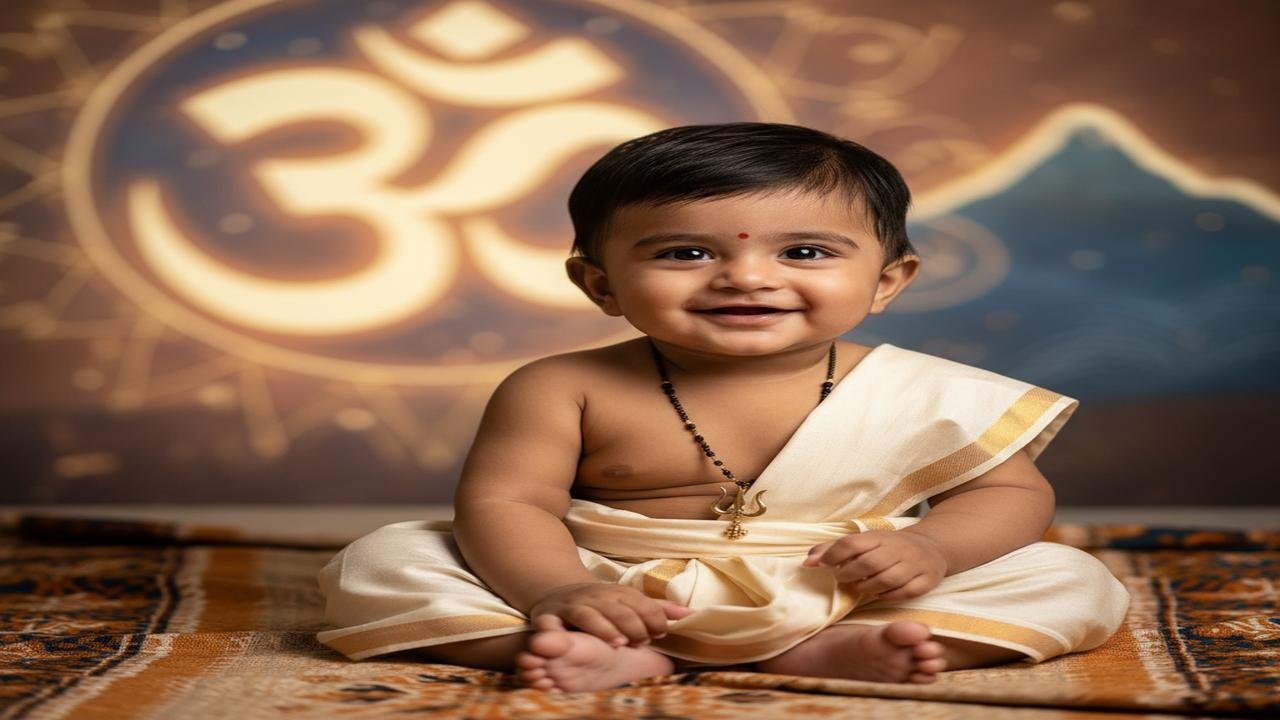
Names inspired by Lord Ayyappa — a short guide
Lord Ayyappa (also Ayyappan) is worshipped across South India as a protector and guardian, often called Manikandan (literally “one with a bell around the neck”), Śāstā (Shasta — a title meaning “teacher” or “ruler”), and Dharma-Śāstā (emphasising his association with dharma — righteous duty). Different traditions describe his origin in different ways: in many popular stories he is the son of Śiva and Vishnu’s Mohinī form and therefore called Hariharaputra (son of Hari and Hara); in other texts he appears as a local Shasta or guardian deity assimilated into broader pūjā (worship) practices. Below are ten modern-sounding boy names that draw on these epithets, their meanings, and practical notes for parents.
Ten modern-sounding names and why they work
-
Manik (MAH-nik) — short form of Manikandan.
Meaning: “bell” or “jewel” (from mani). Why it fits: recalls the iconic childhood epithet of Ayyappa and feels concise and contemporary. Nickname: Mani.
-
Manikanta (mah-nee-KAHN-ta) — the classical name of the deity.
Meaning: literally the name used for Ayyappa in Malayalam/Tamil traditions. Why it fits: traditional and unmistakably linked to the god; widely used in South India. Nickname: Mani, Kant.
-
Kandan (KAN-dan) — derived from Manikandan.
Meaning: in Dravidian usage it evokes “one with an ornament at the neck”; compact and regional. Why it fits: modern-sounding in Tamil and Malayalam speaking contexts. Nickname: Kan.
-
Ayyappan / Ayyan (AY-yuh-pan / AY-yun) — direct forms of the deity’s name.
Meaning: Ayyappan is the full devotional name; Ayyan is a shorter, affectionate form used in Tamil/Malayalam. Why it fits: devotional and familiar; carries clear cultural resonance. Nickname: Ayyu.
-
Sastha / Sasth (SAHST-ha / SAHST) — from Sanskrit Śāstā.
Meaning: “teacher” or “one who commands/sets right.” Why it fits: direct link to Ayyappa’s role as Dharma-Śāstā; can be modernised by shortening to Sasth. Nickname: Sas.
-
Shastin (SHAHS-tin) — a contemporary variant.
Meaning: inspired by Śāstā, updated with a modern ending. Why it fits: sounds contemporary while preserving the traditional root. Nickname: Tin, Shas.
-
Harihar / Hariharan (HAH-ree-har / hah-ree-HAH-ran) — from Hari + Hara.
Meaning: “Hari” (Vishnu) + “Hara” (Śiva) — signifying the deity’s mixed lineage in popular narratives. Why it fits: honours the syncretic identity of Ayyappa in many traditions. Nickname: Hari, Haran.
-
Dharmesh (DHAHR-mesh) — rooted in dharma.
Meaning: “lord/possessor of dharma” (righteousness). Why it fits: echoes the title Dharma-Śāstā and gives a clear moral sense without being overtly devotional. Nickname: Dharm.
-
Dharmik (DHAHR-mik) — adjective form of dharma.
Meaning: “righteous” or “one who follows dharma.” Why it fits: short, modern, and conceptually tied to Ayyappa’s emphasis on discipline and moral conduct. Nickname: Dharm.
-
Saran (SAH-ran) — from Sanskrit śaraṇa.
Meaning: “refuge” or “one who shelters.” Why it fits: devotional connotation that is subtle — Ayyappa is regarded by devotees as a protector and refuge. Nickname: Sar.
Quick practical notes for parents
- Regional fit: Manikanta, Kandan and Ayyappan/Ayyan are particularly common in Kerala and Tamil Nadu; Dharmesh and Dharmik work across India.
- Nicknames and ease of use: shorter forms (Manik, Kandan, Saran) are easy in everyday life and blend tradition with a modern sound.
- Respect and sensitivity: avoid using names strongly identified with ethnic groups or communities without understanding local meanings (for example, many place- and community-names carry specific histories).
- Auspicious considerations: some families consult horoscopes, priests, or elders before finalising a name. These are personal choices within living traditions.
- Pilgrimage and vows: Ayyappa worship often involves vows and a 41‑day observance for pilgrims to Sabarimala; if you plan to follow such practices, consult community elders and health professionals as needed. (Note: long fasts or strenuous pilgrimages can affect health—take appropriate precautions.)
On interpretation and use
Different communities read Ayyappa’s story through different lenses — devotional, mythic, local-guardian or classical-Śaiva/Vaiṣṇava synthesis. The name you choose can reflect a family’s devotional preference or simply an appreciation of the virtues associated with Ayyappa: protection, discipline, and refuge. Be humble about competing interpretations and, if naming for strictly religious reasons, consider asking elders from your community for their perspective.
These suggestions aim to balance authenticity with contemporary taste. Each name offered here has a traceable linguistic or devotional link to Ayyappa while remaining usable in modern Indian families.
