
8 Fierce and Beautiful Baby Girl Names Inspired by Goddess Kali

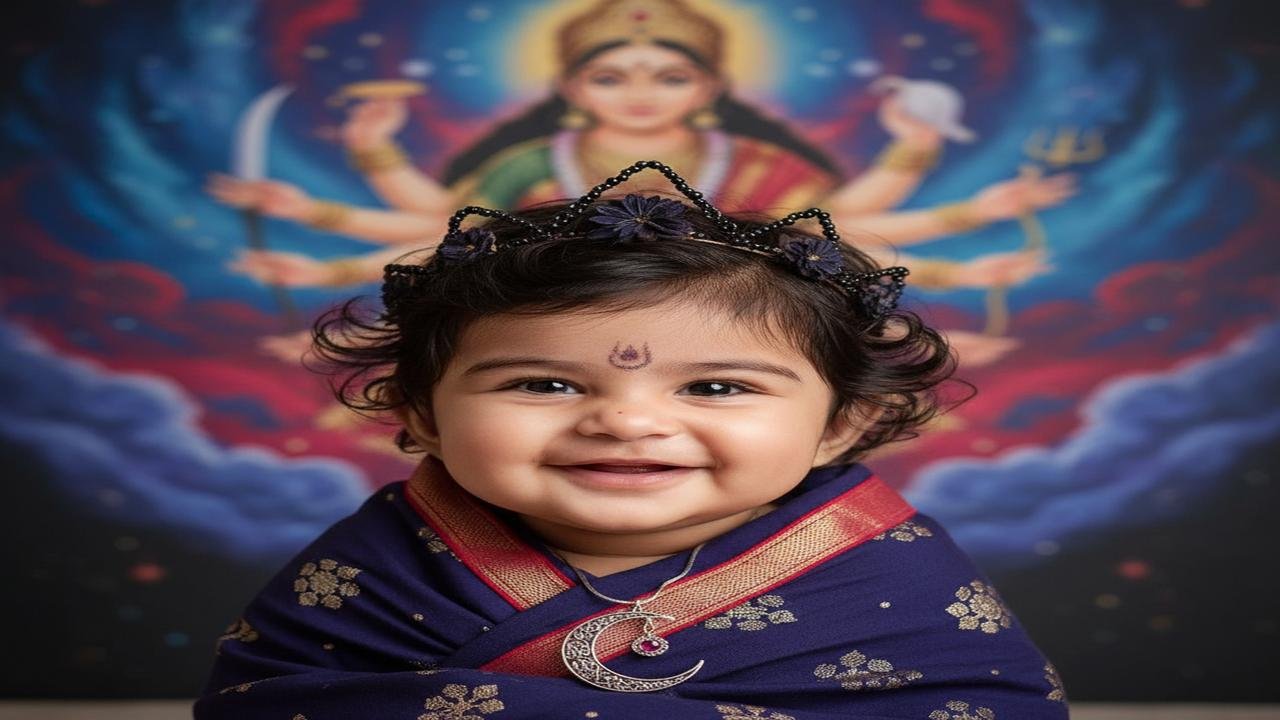
Context: Kali and what she represents
Kālī — literally “the black one,” and etymologically linked to kāla (time) — is a major figure in Hindu thought and devotion. In Śākta (goddess-centred) traditions she is worshipped as supreme Shakti (power); in numerous Puranic and Tantric texts she appears as a fierce, protective, world-destroying and world‑preserving force. Texts such as the Devi Māhātmya (part of the Markandeya Purana, chapters 81–93), the Kalika Purāṇa, and later Tantric literatures present different emphases — conqueror of demons, liberator from ignorance, and a mother who both devours and nourishes. Devotional festivals include Kali Puja (Kartik Amavasya — Kartik new moon) and forms of worship seen during Navaratri; practices and regional customs vary widely across India.
Choosing a name inspired by Kali: tone and considerations
Names derived from Kali can range from gently poetic to very intense. Some carry explicit esoteric or martial connotations, others are subtle allusions (colour, night, liberation). When choosing, families often weigh ritual familiarity, regional pronunciation, and how vivid or solemn the name feels in everyday life. The brief notes below give meanings, pronunciation, scriptural or cultural touchpoints, and suggested nicknames.
Eight fierce and beautiful names
1. Kalika
- Meaning: “Of Kali” or “little Kali” (a feminine form); evokes the goddess directly.
- Pronunciation: kah-LEE-kah.
- Sources & use: Appears in Tantric and Purāṇic lists of goddess names; widely used as a devotional name and as temple epithets (e.g., Kalika temples in Assam and Bengal).
- Nickname: Kali, Lika.
- Note: Familiar and devotional without being severe; suits families wanting a direct link to the goddess.
2. Mahakali
- Meaning: “Great Kali” — emphasizes cosmic, all‑encompassing power.
- Pronunciation: mah-aa-KAH-lee.
- Sources & use: Common in temple names and devotional hymns; used as a liturgical title rather than an everyday personal name in some communities.
- Nickname: Kali, Maha.
- Note: Strong and majestic; some parents find it intense for a child, while others appreciate its gravitas.
3. Bhavatarini
- Meaning: “She who liberates the world” (bhava — worldly existence, tarini — one who ferries/helps across).
- Pronunciation: bha-va-ta-REE-nee.
- Sources & use: An epithet used for Kali especially in Bengali devotional contexts; temples in Bengal and Odisha often use this name for the goddess as saviour and mother.
- Nickname: Tarini, Bhava.
- Note: Balances fierceness with compassion and rescue — a poetic, devotional choice.
4. Chamundi / Chamunda
- Meaning: “She who slew Chanda and Munda” — a fierce warlike form of the Goddess.
- Pronunciation: cha-MUN-dee or cha-MUN-da.
- Sources & use: The episode occurs in the Devi Māhātmya; Chamundi is the presiding deity at Chamundi Hill (Mysore) and many South Indian temples.
- Nickname: Chamu.
- Note: Clearly martial and mythic; culturally resonant in South India.
5. Shyama
- Meaning: “Dark” or “blue‑black” — an epithet used for both Krishna and Kali.
- Pronunciation: SHYAA-ma.
- Sources & use: Classical poetry and bhakti hymns use this epithet; as a personal name it reads soft, lyrical and familiar.
- Nickname: Shay, Shyami.
- Note: Subtle reference to the goddess’s complexion and mystery rather than explicit fierceness.
6. Neela / Neelima
- Meaning: “Blue” (neela) or “bluish” (neelima) — colour associated with Kali’s form.
- Pronunciation: NEE-la, nee-LEE-ma.
- Sources & use: “Neela” appears among epithets describing the goddess’s hue in devotional texts; widely used as a gentle, modern name.
- Nickname: Neel, Neelu.
- Note: A softer, everyday option with an elegant link to the goddess.
7. Kalaratri
- Meaning: “Dark night” — a fierce form of the Goddess who destroys fear and ignorance.
- Pronunciation: kah-la-RA-tree.
- Sources & use: One of the Navadurga forms in Devi lore; invoked for protection during fierce moments of transformation.
- Nickname: Kala, Ratri.
- Note: Intense and evocative; carries strong liturgical resonance, especially during Navaratri.
8. Tara
- Meaning: “Star”; also the name of a Mahāvidyā (tantric goddess) with rescuing, compassionate aspects.
- Pronunciation: TAA-ra.
- Sources & use: Tara appears in Śāktism and Buddhist tantric traditions; she shares redemptive and protective functions that overlap conceptually with Kali in some streams.
- Nickname: Taru, Taari.
- Note: Widely used, easy to pronounce, and spiritually rich without being overwhelmingly fierce.
Practical tips and respectful choices
- Community and family context: Check local and family traditions — some communities reserve certain theophoric names for adults after initiation or prefer epithets over direct names.
- Pronunciation & script: Consider how a name maps across languages and scripts (Devanagari, Bengali, Tamil etc.) to avoid unintended shifts in sound or meaning.
- Everyday life: A very fierce or long liturgical name may be shortened in daily use; think about nicknames and initials you like.
- Interpretive range: Be aware that texts and traditions differ — what is fierce in one region may be maternal in another. If in doubt, consult family elders or local priests/scholars for community-specific understanding.
- Rituals & health caution: Some devotional practices associated with fierce forms (fasts, intense vigils) can be strenuous; if you follow such observances, take common‑sense health precautions and seek guidance from trusted elders or healthcare providers.
Names inspired by Kali can be both an affirmation of strength and a celebration of maternal protection. Whether you choose an explicit epithet like Kalika, a poetic colour name like Neela, or a compassionate Mahavidyā name like Tara, each option carries layers of myth, devotion and local practice — and a rich field of meanings to explain to a child as she grows.
