
Vishnu Sahasranama: The Thousand Names From the Mahabharata

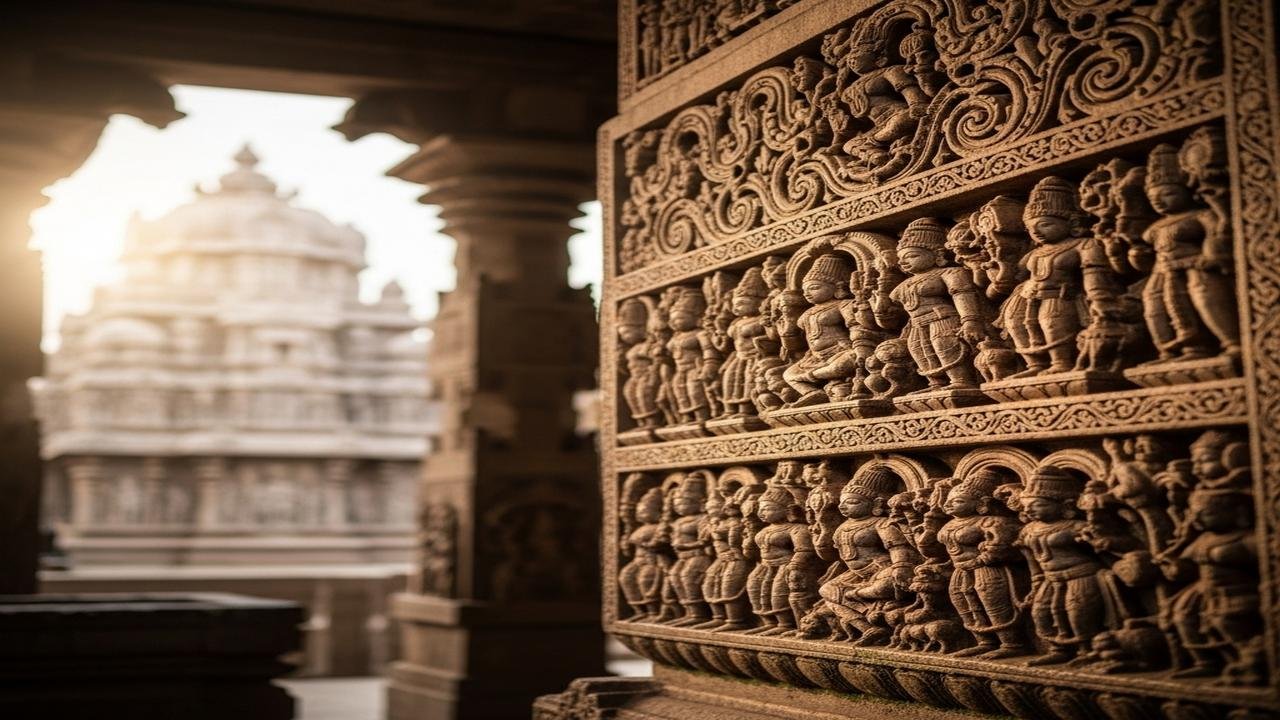
Vishnu Sahasranama — what it is and where it comes from
The Vishnu Sahasranama (literally, “Vishnu’s thousand names”) is a hymn composed as an enumeration of a thousand names and attributes of Vishnu. It appears in the Anushāsana Parva of the Mahābhārata, narrated as part of Bhīṣma’s teachings to Yudhiśṭhira on the battlefield at Kurukṣetra. Over the centuries it acquired a distinctive place in devotional practice, liturgy and commentary across Vaiṣṇava, Smārta and other Hindu traditions.
Why recite it? Spiritual reasons commonly given
- Name as means of devotion. In many bhakti-oriented readings the repeated recitation of a deity’s names — nāma-japa (name-repetition) — is itself an act of surrender and love. The Sahasranama lists attributes that focus the mind on the divine, turning ordinary attention into devotional absorption.
- Tool for meditation and concentration. The structure of repeated names gives a steady object for the mind, aiding dhyāna (meditation). Practitioners often report improved focus simply because the repertoire of names offers successive anchors for attention.
- Map of theology and ethics. Each name in the hymn highlights an attribute of the divine — for instance, compassionate, sovereign, all‑knowing. For many readers the hymn functions as a compact theological syllabus: it teaches what devotees should revere and imitate, translating transcendence into ethical orientation.
- Soteriological orientation. Classical commentators and many traditions read the Sahasranama as a soteriological aid — a means by which repeated naming helps purify the mind and make it fit for liberation. Interpretations vary: Advaita commentators may emphasize knowledge (jnana) revealed through the names, while Vaiṣṇava schools emphasize grace received through devotion.
- Mantric and sonic dimension. Some traditions treat parts of the hymn as mantric: the sound and rhythm themselves are believed to affect the inner temperament. This is a perennial theme in Indian religious thought — that sound can be a vehicle for spiritual transformation.
- Communal and ritual role. Public recitation, singing and group listening foster communal identity and shared devotion. The Sahasranama is commonly used in temple ceremonies, home worship and during major observances such as Ekādaśī and Kārttika in many regions.
How different schools read the hymn
- Advaita (non‑dual) readings. Some Smārta and Advaita commentators see the names as pointers to the underlying reality (Brahman). Names prepare the mind by removing impurities; ultimately the goal is knowledge that transcends names.
- Viśiṣṭādvaita and Dvaita. Sri Vaishnava and Dvaita traditions tend to stress the real distinctiveness of the Divine and the efficacy of bhakti. For them the Sahasranama is both praise and a practicable means to receive divine grace.
- Local and folk perspectives. In many living traditions the hymn is woven into local ritual life, and individual families transmit particular interpretations or chanting styles. There is considerable regional and sectarian variety in melody, emphasis and ritual context.
Common modes of practice
- Japa with mala — repeating names on a rosary is the most widespread private practice.
- Group chanting — temples and bhajan gatherings often recite or sing selections or the whole sahasranama together.
- Listening and śravaṇa — attentive listening to a learned reciter is also valued and considered meritorious.
- Integrated ritual — the hymn may be chanted during pūja, abhiṣeka (consecratory rites), and on festival days like Ekādaśī or in the month of Kārttika.
Practical notes and cautions
- Many teachers recommend sincerity, regularity and an orientation of humility rather than mechanical counting. In several lineages the guidance of a guru is recommended when using the hymn as a formal mantra.
- If chanting involves prolonged fasting, intense breathwork or disrupted sleep, exercise caution and consult a qualified teacher or healthcare professional. This article does not offer medical or therapeutic advice.
- Avoid claims of guaranteed material outcomes. Classical traditions present names as means that assist spiritual growth; the results are described in religious terms (purity, devotion, mokṣa) and interpreted within different schools rather than as empirical guarantees.
What scholars and tradition‑bearers emphasize
Scholars of religion stress that the Sahasranama must be read in context: as both scripture inside the Mahābhārata narrative and as a living liturgical text. Classical commentators — among them medieval Vaiṣṇava and Smārta expositors — wrote glosses that read the names philosophically, ethically and devotionally. Contemporary practitioners testify to its calming and integrating role in personal and communal life. All these perspectives are complementary rather than mutually exclusive.
Why it continues to matter
The continuing appeal of the Vishnu Sahasranama lies in its combination of theological density and accessible practice. As a catalogue of divine attributes it teaches and reorients the mind; as a repeated practice it provides a simple discipline for attention and devotion. Whether approached as mantra, theology, poetry or ritual, it functions as a bridge between classical scripture and everyday religious life, preserving interpretive richness while remaining adaptable to local practice.
