
Pongal: Why Sugarcane Is Central To The Mid-January Harvest

What Pongal is and when it is celebrated
Pongal is a Tamil harvest festival celebrated in mid-January (Thai 1 in the Tamil calendar), coinciding with the sun’s northward movement into Makara (Makar Sankranti). The festival commonly spans four days:
- Bhogi — clearing old things;
- Thai Pongal — the main day of boiling new rice;
- Mattu Pongal — honoring cattle; and
- Kaanum Pongal — social visits and relaxation.
Pongal literally means “to boil over” in Tamil, and the central rite is cooking freshly harvested rice with milk and jaggery until it spills — the overflowing pot is celebrated as a sign of abundance. Sugarcane is one of the festival’s most visible and persistent symbols. Why?
Agricultural and seasonal reasons
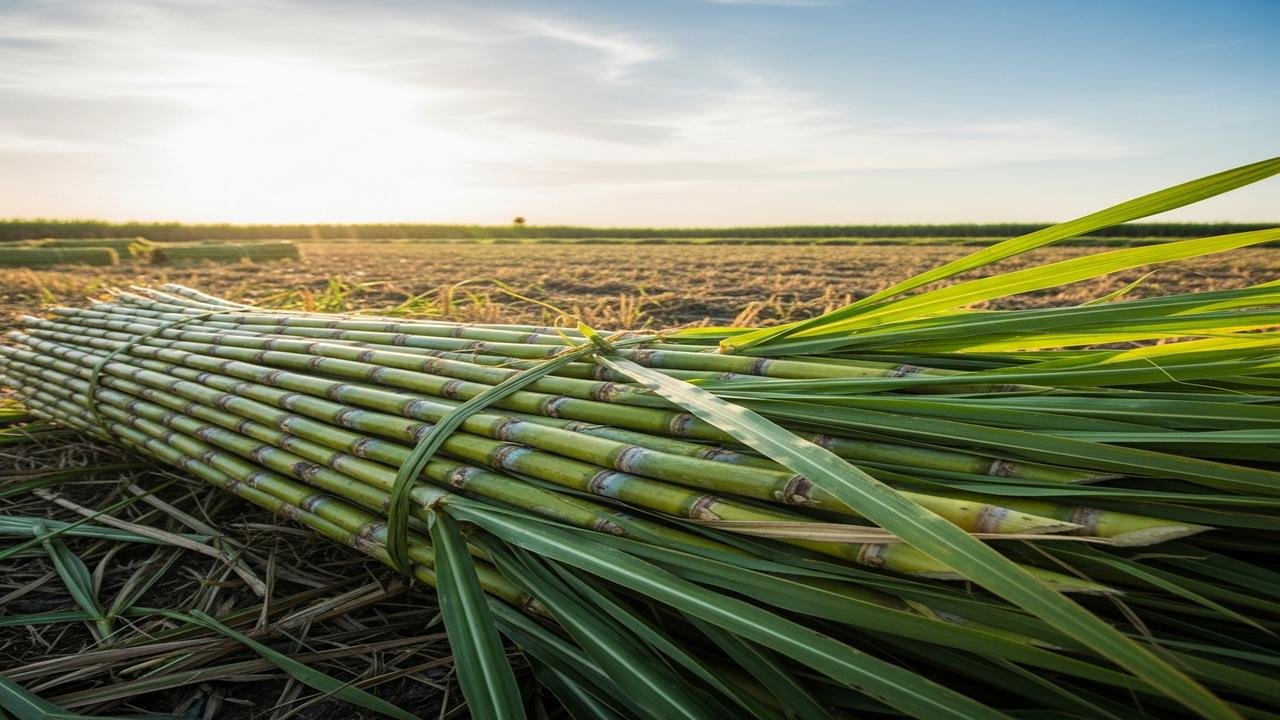
At its simplest, sugarcane is part of Pongal because of harvest timing and ecology. Sugarcane (called ikshu in Sanskrit and commonly cultivated across South India) is harvested around the same season in many districts. When the new paddy crop comes in, so does sugarcane: it is a practical, local crop that rural households have on hand to offer and eat.
- Seasonality: sugarcane ripens in late winter/early spring in many Tamil Nadu agro-climates, making it a natural harvest-time offering.
- Availability: whole stalks are durable, transportable and visually striking, suitable for decorating homes and temples.
Ritual and symbolic meanings
Several overlapping symbolic threads explain sugarcane’s centrality in Pongal rituals.
- Offering to the Sun and nature. Pongal is a thanksgiving to the sun (Surya — sun god) and the agrarian elements. Sugarcane, sweet and tall, becomes an apt offering in the thanksgiving meal presented to Surya and to household deities.
- Sweetness and prosperity. The festival celebrates abundance; sugarcane literally embodies sweetness. Placing stalks around the cooking area and sharing cane pieces signals wishes for a sweet, prosperous year.
- Wholeness and fertility. A sugarcane stalk is a single, segmented unit — a living column that suggests continuity, fertility and household wellbeing. In folk idioms the stalk’s nodes and shoots connote regeneration.
- Prasada and communal sharing. After ritual offerings, sugarcane is distributed to guests and animals. Its role as prasāda — the consecrated gift — links food, devotion and hospitality.
Animals, cattle and Mattu Pongal
On Mattu Pongal, cattle are honored for their role in agriculture. Sugarcane enters here both practically and symbolically:
- Cattle are fed sugarcane as a high-energy treat; garlands of sugarcane and turmeric may decorate oxen and cows.
- Feeding cane to animals recognizes interdependence between humans and livestock in a rural economy.
Across many villages, offering sugarcane to cattle is as much a seasonal acknowledgement as a ritual requirement.
Historical and textual contexts
Practices vary, but the use of sugarcane in harvest rites has deep cultural roots. Vedic and post-Vedic literature refer to cultivated crops such as ikshu (sugarcane) in agricultural and ritual contexts; regional Tamil folk texts and temple traditions elaborate local usages. There is no single scriptural command that prescribes sugarcane for Pongal across all Hindu schools — the custom grew from village agricultural life and was adapted into ritual form.
Different communities read the symbolism differently. In Tamil folk practice the emphasis is on thankfulness and abundance; some Brahmanical ritualists focus on the sanctified offering to deities; Śaiva, Vaiṣṇava and Smārta households may vary in the ritual sequence while retaining sugarcane as a cultural marker of the festival.
Social and economic dimensions
Sugarcane’s role is not only religious or symbolic. It also carries social and economic meanings:
- Marker of prosperity: Visible stacks of sugarcane around a house signal a good harvest and financial well-being.
- Local economy: The festival supports local farmers and traders who supply stalks, jaggery, and fresh produce.
- Cultural continuity: Sugarcane is a shared visual language that links urban and rural celebrations; even city families buy cane to keep the seasonal connection.
Variations and contemporary practices
Not everyone celebrates Pongal the same way. In some urban households sugarcane is symbolic and limited to a few stalks; in villages it may be central to the courtyard display. Christian and Muslim families in Tamil-speaking regions sometimes participate in the social aspects of Pongal — decorating homes and sharing sweets — without the explicit ritual offering to deities. Such plural participation shows how an agricultural festival becomes a wider cultural practice.
Practical notes
- If you have dietary restrictions or medical conditions such as diabetes, consult a physician about sugarcane or jaggery consumption.
- If you observe any fast or ritual that changes your diet or exposure to sun, take usual precautions to stay hydrated and safe.
Conclusion
Sugarcane in Pongal works on several levels at once: it is a timely crop, a vivid material offering, a symbol of sweetness and abundance, and a social token that binds households, animals and neighbours in a shared season of thanksgiving. While interpretation differs across texts and communities, the stalk’s persistent presence reflects the festival’s agrarian roots and its continuing role as a lived expression of gratitude to the sun, the earth and the labour that sustains life.
