
Krishna Declares He Is the Soul of All Beings

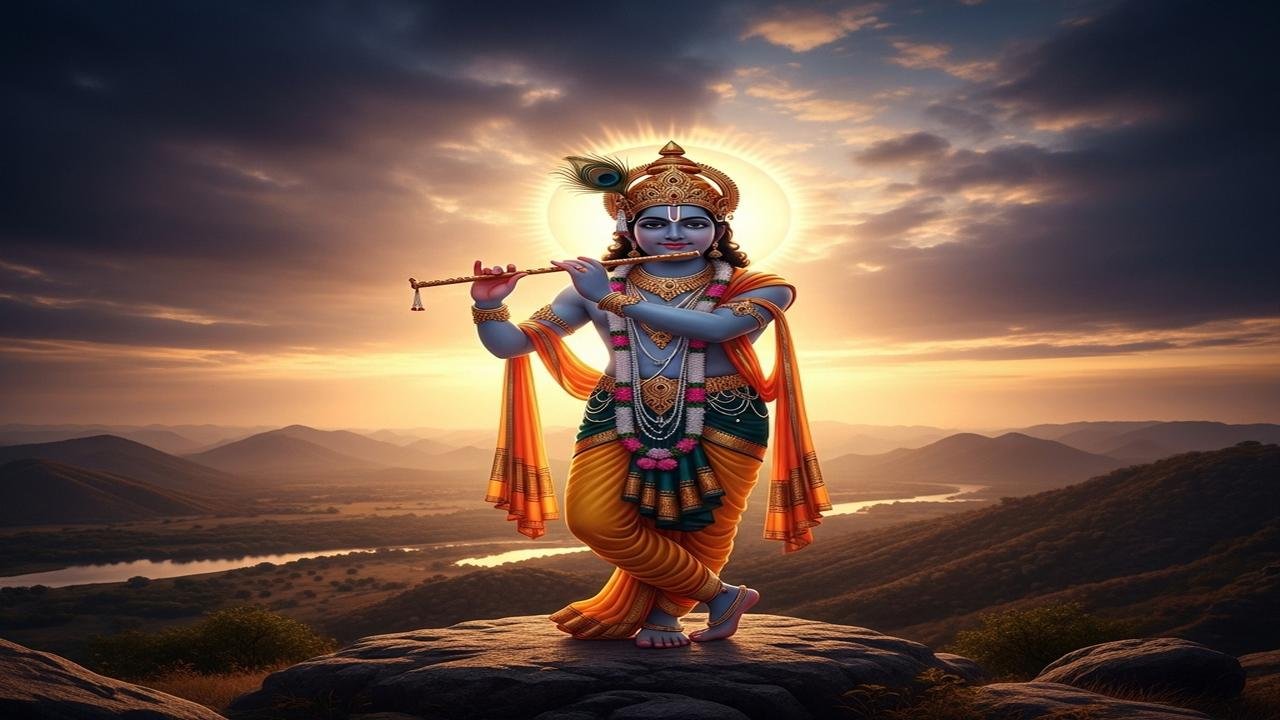
Context: Krishna’s declaration in the Bhagavad Gītā
In the Bhagavad Gītā — the dialogue between Arjuna and Krishna embedded within the Mahābhārata — Krishna makes several striking statements that identify him with the indwelling Self. One clear declaration comes in Chapter 10, verse 20: aham ātmā gudākeśa sarva-bhūtāśaya-sthita — “I am the Self (ātman), O Gudākesha, seated in the hearts of all beings.” The Gītā repeats and develops this claim in several places (see also Chapter 11, the universal-form revelation, and Chapter 15.15 where the Lord says he dwells in the hearts of all).
These verses appear in a teaching context: Krishna is answering Arjuna’s moral and spiritual confusion on the battlefield of Kurukṣetra. The statements are not isolated metaphysical propositions but part of a broader soteriological and ethical discourse about duty (dharma — ethical duty), devotion (bhakti), knowledge (jñāna) and action (karma).
Where the claim appears and what it says
- Chapter 10 (Vibhūti-yoga) contains the pointed line that Krishna is the ātman dwelling in all beings; the chapter lists divine manifestations and inner opulences.
- Chapter 11 (Viśvarūpa-darśana) shows Arjuna granted a vision of Krishna’s cosmic form, emphasising Krishna’s immanence and transcendence. The vision dramatizes the claim “I am all that exists” in symbolic and sensory terms.
- Chapter 15 and later passages reiterate that the Lord is the inner controller, present as witness and support of life and mind.
Philosophical readings: monism, qualified monism, and dualism
Different schools within Hindu philosophy read the Gītā lines in distinct ways, and respected commentators have argued these positions for centuries.
- Advaita Vedānta (non-dualism) — Classical advaita, as represented by Śaṅkarācārya, treats Krishna’s statements as affirmations of the essential identity of the individual Self (ātman) and the supreme reality (Brahman). From this angle, “I am the Self in all” points to an ultimate ontological unity underlying apparent plurality.
- Viśiṣṭādvaita (qualified non-dualism) — Ramanuja and his followers accept Krishna as the supreme person who pervades the universe while maintaining real distinctions. They read the Gītā’s indwelling claim as divine omnipresence that does not eliminate individual selves but grounds their being.
- Dvaita (dualism) — Madhva’s tradition interprets the claim as asserting God’s omnipresence and sovereignty while upholding an eternal difference between the Supreme and individual souls.
Gītā commentators also differ about the practical import of the claim: is it primarily metaphysical truth, devotional consolation, a soteriological tool, or a rhetorical device to restore Arjuna’s courage? These are legitimate and long-standing scholarly debates.
Scriptural and Upaniṣadic background
The idea that the divine or the Self resides in the heart is rooted in the Upaniṣads and other early texts. Sayings such as “the Self is in the heart” and images of the inner light or witness recur across Indian scripture. The Gītā weaves into this heritage, using both metaphysical language and the narrative force of a mentor revealing himself to a disciple.
Practical and ethical implications
How communities and practitioners draw consequences from “Krishna as the Self of all” varies, but several recurrent themes appear:
- Compassion and non-harm: If the divine is present in all beings, then ethical concern for others is reinforced. Some traditions use this hermeneutic to support ahimsa (non-violence) and service.
- Bhakti and remembrance: Devotional practices — chanting, meditation on the deity’s presence, service (seva) — become means to cultivate awareness of divinity within and around oneself.
- Inner authority and self-knowledge: The claim encourages inward inquiry (jnana) as a complement to ritual and social duty; it reframes moral action as performed in the presence of the indwelling Lord.
Different ritual and devotional traditions emphasise different responses. In Vaiṣṇava bhakti, for example, Tamil Alvars and North Indian bhakti poets read the claim as intimate presence that invites loving relationship. Smārta and Vedāntic circles may stress contemplative realisation.
How living traditions incorporate the idea
- Temple and home worship: Priestly and lay practices often frame deity darśana (seeing) and arhatic presence as both transcendent and immanent — the deity is both in the sanctum and within the devotee’s heart.
- Ethical exhortation: Reformers and social leaders across traditions have cited the Gītā’s indwelling theme in calls for social justice and compassionate conduct.
- Philosophical teaching: Vedānta schools continue to teach different readings of the same verses in formal study and commentary, preserving plural interpretive resources within Hindu intellectual life.
Modern reflections and a humble conclusion
In contemporary India the Gītā’s statement that “I am the soul of all beings” continues to be read in diverse ways — as metaphysical affirmation, devotional solace, ethical imperative and philosophical challenge. Scholars and practitioners alike treat the line as part of a larger scriptural and lived conversation, not as a single proposition that ends debate.
Readers interested in exploring further would benefit from comparing translations and commentaries from different schools (Advaita, Viśiṣṭādvaita, Dvaita) and from considering how the claim functions within the entire Gītā text rather than as an isolated verse.
Note on practice: If devotional practices connected to this teaching involve prolonged fasting, intense breathwork, or other strenuous techniques, seek guidance from qualified teachers and healthcare professionals before beginning.
