
Janmashtami Special: 10 Baby Names From Krishna’s Life And Their Sweet Meanings

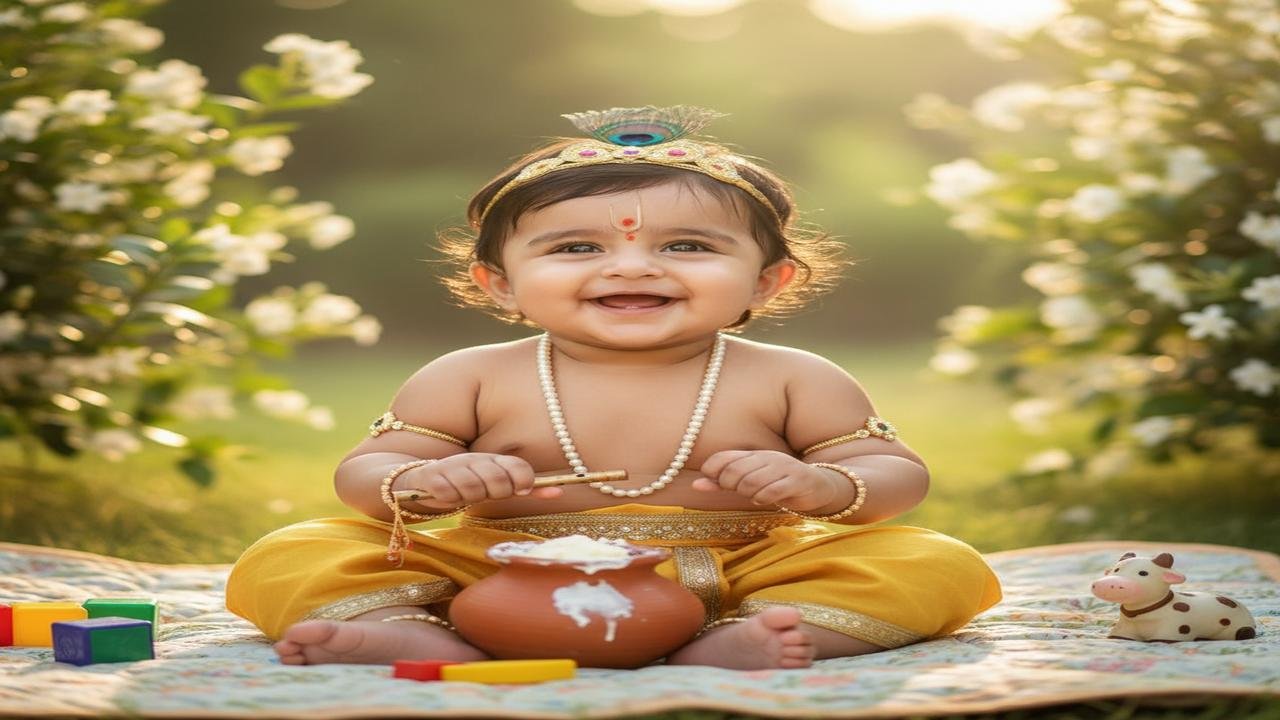
Janmashtami and naming traditions
Janmashtami commemorates the birth of Lord Krishna and falls on the ashtami (eighth lunar day) of the Krishna Paksha in the month of Bhadrapada. The festival is observed across many Indian traditions — Vaiṣṇava, Smārta and others — with bhajans, midnight celebrations and, in many families, the sharing or selection of baby names inspired by Krishna’s life. If you or your family observe fasting or other physical practices on Janmashtami, take basic health precautions and consult a medical professional if you have health concerns.
Ten baby names from Krishna’s life and their sweet meanings
Below are ten popular names drawn from episodes and epithets of Krishna found in texts like the Mahābhārata, Harivaṃśa and the Śrīmad Bhāgavata (Bhāgavata Purāṇa), along with short meanings and cultural notes. Where traditions differ, a brief attribution is given.
-
Krishna
Meaning: Dark, attractive, or all-attractive.
Context: The primary name used throughout the Mahābhārata and Bhāgavata Purāṇa. The name is often read as describing both the dark complexion and the supreme attractiveness of the Lord.
Notes: Widely used, timeless and pan-Indian. In some devotional contexts, Krishna is addressed with deep theological meanings, while in folk contexts the focus is his childhood sweetness and pastoral life.
-
Govinda
Meaning: Protector of cows; also one who brings joy to the senses or protects living beings.
Context: Common in Bhakti literature and used in the Bhagavad Gītā and later devotional songs. The etymology allows multiple respectful senses; different commentators emphasize either the pastoral or the salvific meaning.
Notes: Govinda is popular in many regions; short forms like “Govi” or “Vind” are sometimes used colloquially.
-
Gopala
Meaning: Cow-keeper or protector of the gopis’ cows.
Context: Strongly associated with Krishna’s childhood in Vraja (Vrindavan), where he tended calves. The name appears in Puranic stories and devotional hymns describing the pastoral setting.
Notes: Gopala carries a sweet, rustic image; Gopal and Gopi– prefixes/suffixes lead to affectionate variants.
-
Vasudeva
Meaning: Son of Vasudeva; also read as “one who dwells in all” in later theological glosses.
Context: Historically a patronymic (Krishna, son of Vasudeva). In Vaishnava theology, commentators extend the sense to cosmic indwelling. The name appears in the Mahābhārata and Purāṇas.
Notes: Formal and classical; often used in compound names like Vāsudeva or Vasudev.
-
Madhusudana
Meaning: Slayer of the demon Madhu.
Context: Found in the Viṣṇu Sahasranāma and Purāṇic narratives where Krishna (or Viṣṇu) defeats the asura Madhu. It is a martial and victorious epithet.
Notes: A strong, classical choice that signals mythic heroism.
-
Keshava
Meaning: Slayer of the demon Keśi; alternatively “one with beautiful hair.”
Context: Appears in the Bhagavad Gītā and Viṣṇu Sahasranāma. Different traditions read the name with distinct emphases — martial in some, aesthetic in others.
Notes: Keshava is used across devotional and classical registers and lends itself to short nicknames like Kesh.
-
Damodara
Meaning: One tied by the belly with a rope (dāma = rope, udara = belly).
Context: A tender childhood story from the Bhāgavata Purāṇa (Book 10) describes Yashoda binding Krishna as he misbehaves; the name evokes intimacy and parental love.
Notes: Damodara is especially beloved in devotional songs and evokes a private, affectionate mood; used mostly as a male name.
-
Balakrishna
Meaning: Child Krishna (bala = child).
Context: Emphasises Krishna’s childhood leelas (divine play). Found in popular hymns and temple iconography depicting the infant Lord.
Notes: Very common in South India and elsewhere; can be shortened to “Bala” or “Krish.”
-
Murlidhar (also Murli or Venu Gopal)
Meaning: Flute-holder; one who plays the flute (mūrli/venu = flute, dhara = holder).
Context: Conjures the image of Krishna enchanting the gopis and the forest with his flute. Widely used in bhajans and regional poetry.
Notes: Musical and lyrical; appeals to families who love the poetic or artistic side of Krishna’s persona.
-
Shyamsundar (or Shyam)
Meaning: Dark-beautiful or the beautiful dark one.
Context: Shyama (dark) and sundara (beautiful) together praise both Krishna’s complexion and his loveliness. Found in devotional literature across North India and Bengal.
Notes: Shyam is a commonly used affectionate form; Shyamsundar conveys a poetic, devotional tone.
Practical tips for choosing a Krishna-inspired name
- Consider context: Some names are strongly theological (Vasudeva), others are affectionate (Damodara). Think about the tone you want.
- Check regional usage: Pronunciation and suffixes (–lal, –dev, –prasad) vary across languages; choose a form that fits your family language and culture.
- Meaning over trend: Many families prefer names with clear meanings and a story; use the name as a way to introduce the child to cultural memory and ethical motifs like compassion and courage.
- Respect plural interpretations: Scholars and devotees read these names differently — some emphasize mythology, some metaphysics. Acknowledge this range when explaining the name’s choice to others.
Names drawn from Krishna’s life carry stories — of play, protection, victory and love. Whether you choose a classical epithet or an intimate childhood name, let it be one that you can explain and cherish across traditions.
