
Arjuna Asks Who Is Superior – Devotees of Form or Formless

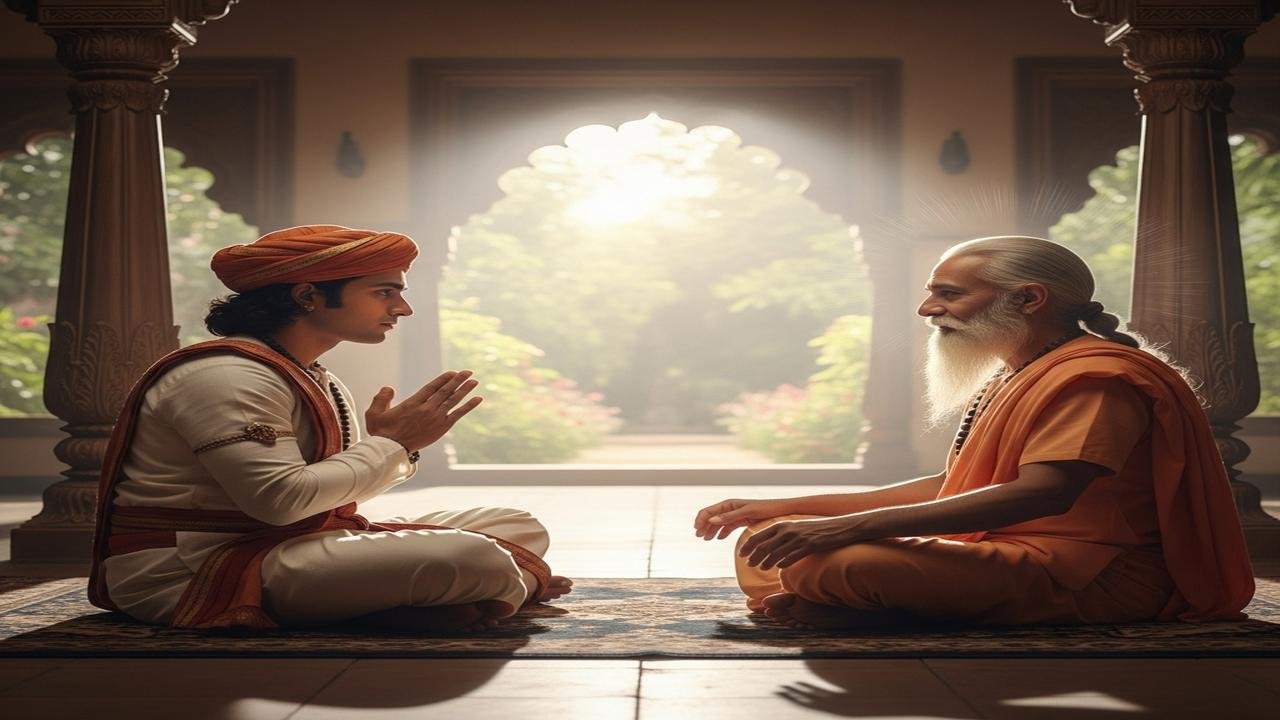
The question in the Gītā
On the battlefield of Kurukṣetra, Arjuna asks a focused philosophical question: is it better to worship the saguna Lord — the Divine with attributes and form — or the nirguṇa Absolute — the formless, attribute-less Reality? This exchange appears in the Bhagavad Gītā, chapter 12 (verses 1–6), and has been a central touchpoint for debates about devotion, meditation and ultimate reality across Hindu thought.
Two ways of seeing the Divine
At root the question contrasts two modes of spiritual orientation:
- Saguna worship — devotion to a personal deity (for example, Viṣṇu, Śiva, Devī) with name, form and attributes. Common practices include puja (ritual worship), kīrtana (song), mantra and personal surrender.
- Nirguṇa realisation — pursuit of the formless Absolute (the Brahman — ultimate reality) beyond qualities and images. Practices emphasise contemplative meditation, negation (neti-neti), and absorption in the impersonal.
What these paths aim for
Both aim at liberation or union: the saguna path typically culminates in intimate relation with a personal Lord (bhakti, service, mutual love), while the nirguṇa path aims at identity with the undivided Self or Brahman. The distinction is often more pedagogical than absolute — many traditions hold that the personal and impersonal are ultimately not separate, even if the methods differ.
Krishna’s reply in chapter 12
Krishna responds to Arjuna by noting practical and psychological differences. He says those who worship Him in personal form with steadfast love are dear to Him (Gītā 12.6–7). He also explains that for people of steady intellect who have subdued the mind, the formless path (yoga of the unmanifest) is possible but difficult because it requires persistent withdrawal and concentration (Gītā 12.3–5).
The Gītā thus neither dismisses the formless ideal nor elevates it abstractly above devotion; it recognises differing capacities and inclinations. The practical verdict is inclusive: sincere devotion to the personal is a legitimate, effective path for most aspirants, while advanced contemplatives may follow the formless route.
How different schools interpret the passage
- Advaita Vedānta (Śaṅkara): Emphasises nirguṇa Brahman as the highest truth, reading devotional practices as useful upāya (means) that purify mind for advaitic insight. Śaṅkara’s commentary treats Bhakti as ultimately leading to knowledge of non-duality.
- Viśiṣṭādvaita (Rāmānuja): Gives decisive place to the personal Lord (Ishvara) and sees devotion to a saguna deity as the true end; the formless aspect is not denied but is integrally related to a qualified unity where the personal is real.
- Dvaita (Madhva): Insists on real difference between individual soul and God; personal devotion is essential and superior in practice.
- Bhakti traditions (Vaiṣṇava, Śaiva, Śākta): Tend to prioritise loving relationship with a deity, while recognising contemplative practices; many saints say the path you can sustain with love is the right one.
- Tantric currents: Work with both form and formlessness — many practices use deity-visualisation and mantra to awaken subtle realisations that culminate in recognition of a transcendent void or pure consciousness.
- Modern readers: Commentators such as Aurobindo or contemporary scholars stress psychological pragmatism: forms help transform emotion and concentration, while formless meditation demands high mental discipline.
Practical implications for devotees
What does this mean for someone deciding their path?
- Start with the inclination you can sustain. If singing, temple worship and service cultivate steady love, they are valid spiritual work. If silent meditation and inquiry suit your temperament, disciplined contemplative practice can be pursued.
- Use complementarity. Many practitioners combine methods: start with saguna practices to stabilise the heart and senses, then move to formless meditation; or alternate devotion and silent inquiry.
- Community and discipline matter. Rituals, sangha and a teacher can sustain practices that might otherwise lapse.
- Psychology and transformation are the measure. Traditions often judge success by reduction of egoism, increase of compassion and steadying of the mind, rather than mere doctrinal correctness.
Note: Some retraining practices (extended fasting, intensive breathwork or long retreats) can affect physical or mental health — consult a qualified teacher or doctor before undertaking such regimes.
Where humility helps
Across centuries Hindu teachers recognised both temptation and arrogance in claiming one approach as universally superior. The Gītā’s exchange is pedagogical: Arjuna’s question surfaces a real dilemma, and Krishna’s answer respects human diversity. Scholars and saints remind us that paths are graded by the aspirant’s capacity — strength of concentration, emotional temperament, life obligations — not simply by abstract hierarchy.
In living traditions, sacred images, festivals and temple worship continue to draw millions into devotion, while centres of jñāna (knowledge) and silent meditation attract others. Rather than a contest, the two approaches function as complementary streams in a diverse river of spiritual life: forms teach the heart to love; formlessness trains the mind to rest in the unconditioned. Many who begin with one discover the truth of both.
