
Bhagavad Gita Lamp Simile: A Windless Lamp For Steady Mind

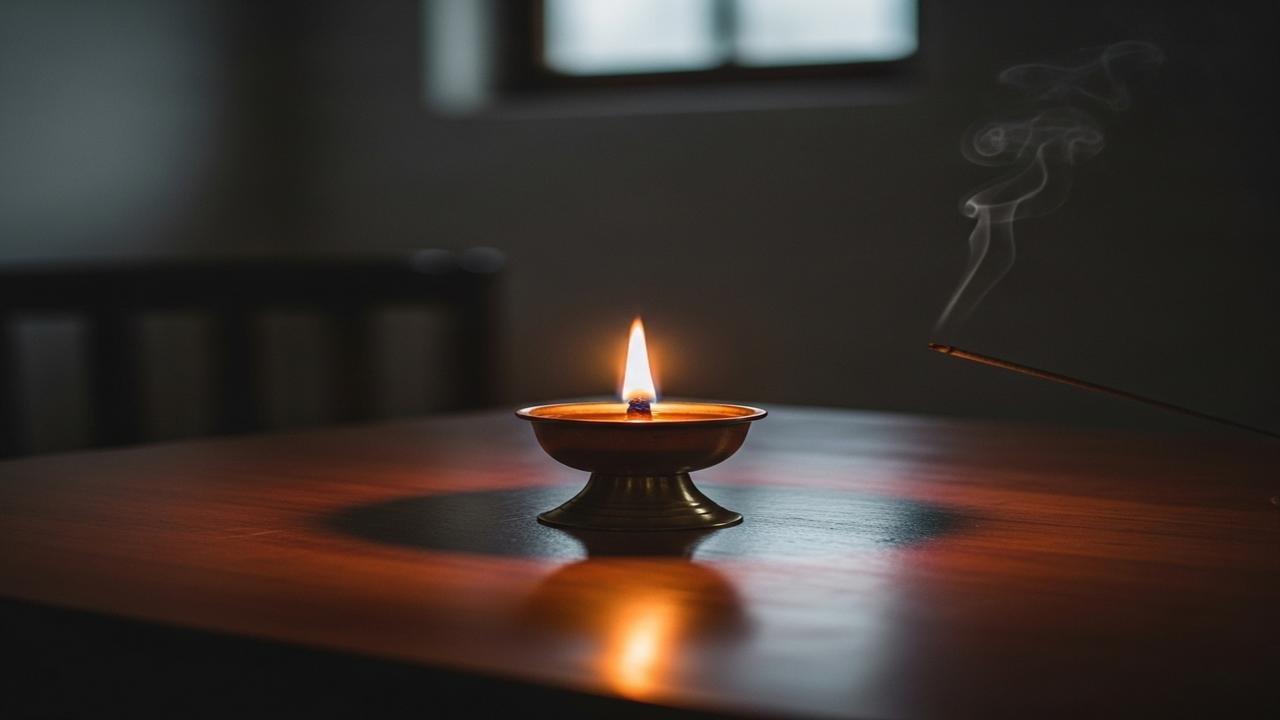
Context: a lamp in a windless place
In the Bhagavad Gītā’s chapter on meditation (dhyāna-yoga), Krishna offers a compact image: the yogī’s mind is like a lamp that remains steady in a place without wind. That single simile has been a touchstone across centuries of Hindu teaching because it links a concrete household object—a dīpa (lamp)—to an inner state that is valued in many streams of Indian spirituality.
What the image conveys
At face value the simile stresses three things:
- Stillness: a lamp that does not flicker represents a mind not buffeted by passing impressions or emotional turbulence.
- Endurance: steadiness over time—like a flame that keeps burning—points to sustained attention rather than momentary calm.
- Clarity: a steady light dispels darkness steadily; similarly, a steady mind enables clear perception and discrimination.
Why a lamp?
In the pre-electric domestic and ritual world of ancient India the oil lamp was the primary instrument of illumination. The lamp’s light is easily disturbed by gusts; so “windless” becomes an apt metaphor for conditions that favour attention—absence of distracting impulses or sense-winds. The image therefore speaks to the household and ritual contexts familiar to Gītā listeners and readers.
How classical texts and teachers read it
Commentators and schools have drawn different implications from the image while agreeing on its central point: the ideal of sustained inner equipoise.
- Advaita (Śaṅkara): Śaṅkara reads the steadiness as preparatory to jñāna (knowledge). A mind like a steady lamp is fit to reflect the Self; once the mind’s oscillations cease, the unchanging Brahman shines forth.
- Viśiṣṭādvaita (Rāmānujā) and Dvaita (Madhva): These schools see meditative steadiness as integrated with devotion. A steady mind helps the devotee remain fixed on the Lord; but ultimate liberation also depends on divine grace and relationship, not only mental control.
- Bhakti traditions: Many bhakti teachers treat the lamp as symbolic of constant remembrance—an inner offering that is not merely contemplative but also relational: the heart keeps its light for the deity.
- Śaiva and other tantric currents: Similar metaphors—fixed light, unshaken flame—appear in Śaiva and tantric literature where inner stillness is a means to inner awakening or direct perception of an immanent ground. Interpretations vary about the role of ritual, breath, and subtle-body practices.
Practice implications: from metaphor to method
The Gītā’s image does not float in isolation; the surrounding verses give practical pointers that traditions have systematised into meditative techniques.
- Posture and steadiness: sit firmly and compose the body; physical steadiness supports mental steadiness.
- Pratyāhāra — sense withdrawal: drawing the senses inward reduces the “winds” that disturb the inner lamp.
- Ekāgrata — one‑pointedness: cultivating single-pointed attention on an internal object or the Lord stabilises the mind’s light.
- Regulated breath: breath control is commonly advised as a means to steady the mind; many traditions link alternating or slow breathing with reduced agitation.
Caution: certain breath practices can affect health; learn them from a qualified teacher and consult a medical professional if you have respiratory or cardiovascular issues.
Philosophical nuance: steady, not suppressed
A frequent misunderstanding is to read the simile as a call to suppress thoughts. Classical interpreters distinguish between repression and refinement. A steady lamp does not imply an extinguished mind; rather the mind’s light is clear, unobscured by unregulated desire, anxiety or discursive thinking. In many schools steadiness is a condition for insight or loving attention, not a goal in itself.
Cultural resonance and ritual echoes
The lamp image also resonates beyond the yoga mat. In temple and home ritual the unshaken lamp often signifies the abiding presence of the deity and the continuity of devotion. Poets and bhakti songs employ the lamp as a symbol of the heart’s steadfastness. The persistence of the image across textual genres—from Upaniṣads to bhajans—shows its versatility: it can describe epistemic readiness, devotional constancy, and ethical temperance.
Questions and differences worth noting
- Is inner steadiness achieved by technique alone, or does grace play the decisive role? Schools disagree; some emphasise disciplined practice, others emphasise divine gift.
- Does steadiness culminate in knowledge, devotion, or embodied presence? Different traditions describe different peaks—jñāna, prema (love), or direct experiential absorption.
- How does social life fit with the steady lamp ideal? The Gītā itself argues that steady action in the world, performed without attachment, is compatible with inner equanimity.
Conclusion
Krishna’s lamp simile is compact but capacious: it maps attention, endurance, and clarity onto a domestic image. Across Advaita, Viśiṣṭādvaita, Dvaita, Śaiva, and bhakti readings, the lamp continues to invite practitioners to cultivate a mind that can hold its light undisturbed—whether to see the Self, to hold love for the Lord, or simply to act in the world with steadiness. The diversity of interpretations is itself instructive: steadiness may be trained in many ways, and its fruits are named differently by philosophy, devotion and practice.
