
Bhagavad Gita Sannyāsa Versus Karma In Chapters 2, 3, 18

Background: Arjuna’s dilemma
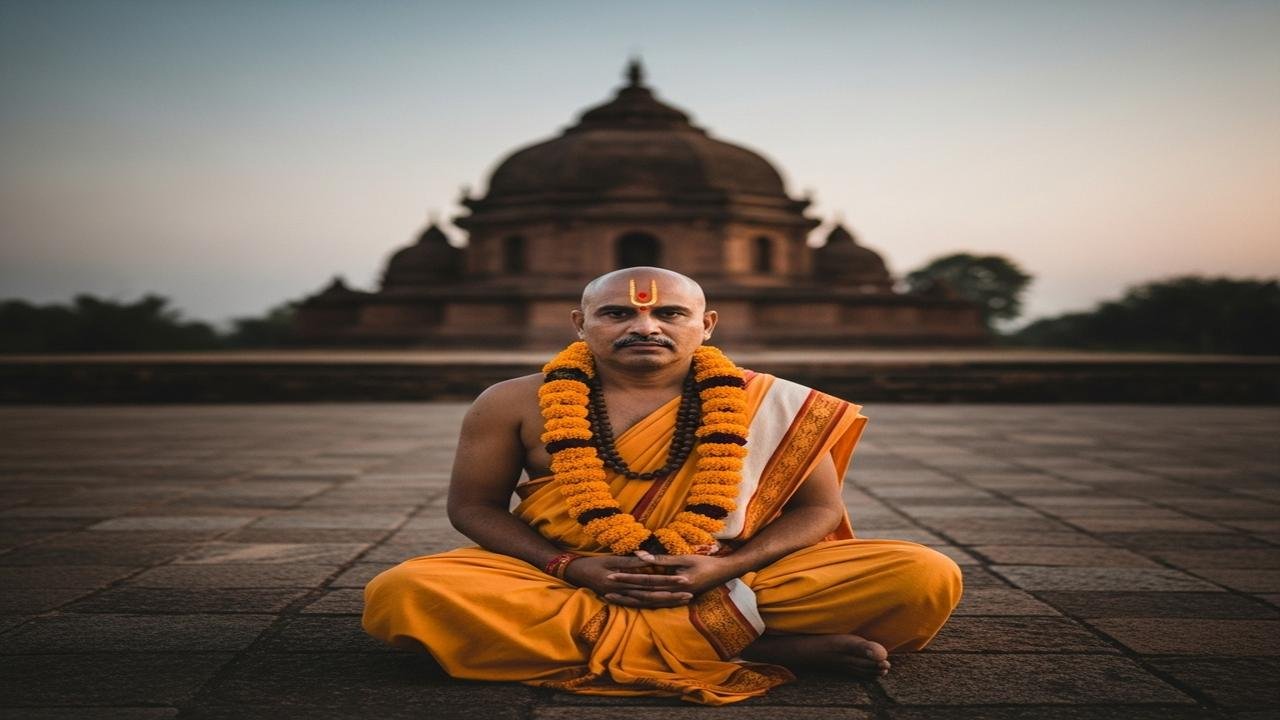
In the Bhagavad Gītā, the warrior Arjuna asks a central moral and spiritual question: should he renounce action and retreat from the battlefield, or carry out his duty and fight? This is not just a military question; it frames a perennial Hindu tension between sannyāsa — renunciation — and karma — action. Different chapters of the Gītā and later commentators address that tension in nuanced ways.
What the words mean
- sannyāsa — renunciation, often understood as giving up engagement with worldly life or its fruits.
- tyāga — renunciation of the fruits of action; a less radical stance than sannyāsa.
- karma — action, especially action performed in the world.
- dharma — duty or right conduct; in Arjuna’s case, his kṣatriya (warrior) duty.
- jnāna — knowledge, especially self-knowledge or insight into ultimate reality.
Krishna’s reply in the Gītā — the balance
Krishna responds to Arjuna across several chapters. Key points include:
- Gītā 2:11–72 introduces the philosophical grounds: the Self (ātman) is not destroyed by bodily death, so action with right understanding is possible.
- Gītā 2.47 famously states that one has the right to action but not to the fruits of action (karmaṇy evādhikāras te), which many read as a call to perform duties without attachment.
- Gītā 3 (Karma-yoga) emphasizes that action is unavoidable: even maintaining the body requires activity, and refusing action can create disorder. Krishna urges action performed as an offering, without selfish desire.
- Gītā 18 contrasts sannyāsa (renunciation of actions) and tyāga (renunciation of the fruits). Krishna ultimately valorizes tyāga combined with right knowledge: acting from duty, free of attachment, is superior to mere withdrawal.
So, in the Gītā’s framework, the question is not simply “act or renounce?” but “how does one act?”—with knowledge, without selfish desire, and in accordance with dharma.
How different traditions interpret the choice
- Advaita Vedānta (Śaṅkara and followers): Emphasizes jñāna. Sannyāsa—turning inward to realize the Self—is the highest path. Yet Śaṅkara often reads the Gītā as recommending action properly ordered for householders until one is ripe for renunciation.
- Vaiṣṇava schools (Rāmānuja, Madhva, Bhakti traditions): Stress devotion and surrender. Renunciation is inward—giving up ego and desire—and is compatible with active devotion and service (seva). Many bhakti teachers frame karma-yoga as service offered to the Lord.
- Śaiva and Tantric perspectives: Sometimes value spiritual practices that transform worldly life rather than rejecting it. In some Śākta/Tantric strands, the world can be a field for liberation when ritual and internal discipline are applied.
- Smārta and householder orientations: Classical dharma texts outline life stages (āśramas) where sannyāsa is a final stage, but most people live as grihasthas (householders) performing duties while cultivating dispassion.
Practical implications for modern life
The Gītā’s teaching has direct practical value for people balancing ethical and social responsibilities:
- Keep action aligned with duty: identify responsibilities you cannot abandon (family, work, community) and perform them conscientiously.
- Cultivate dispassion (vairāgya): this means reframing motivation away from selfish reward toward service, learning, or offering.
- Practice mindful offering: dedicate the results of your work to a higher purpose—be it God, society, or the common good.
- Understand stages: some choose formal renunciation; others pursue an “inner sannyāsa” while living in the world. Both options have precedents in scripture and tradition.
- Avoid extremes: complete withdrawal can be responsible for some; for many, responsible engagement with detachment is the spiritual challenge.
Quick comparison: sannyāsa vs action
- Sannyāsa: external withdrawal, formal renunciation, emphasis on contemplative practices and jñāna.
- Tyāga in action: continuing duties but renouncing attachment to outcomes; emphasis on karma-yoga and ethical action.
- Overlap: both aim to remove egoic desire and lead to liberation; both appear in scripture as legitimate paths depending on temperament and life situation.
When renunciation is recommended — and when it isn’t
Classical texts and later commentators usually recommend sannyāsa only when one is mature enough to bear its vows and consequences. Many Gītā commentators explicitly say that for most people, performing one’s duty with dispassion is wiser than abrupt withdrawal. Conversely, for those called to intense sadhana, renunciation can be the most direct route to realization.
Practical exercises and a caution
- Simple practices: daily duty lists, brief reflection before action (“For whom am I acting?”), and short periods of withdrawal (silence, meditation) to cultivate inner freedom.
- Ethical check: choose actions that do not harm others and fit within your social responsibilities.
- Caution: intense fasting, prolonged breathwork, or abrupt social withdrawal can affect health; consult experienced teachers and, when needed, medical advice.
Conclusion — an inclusive reading
The Gītā does not present a hard binary. Rather, it offers a spectrum: outer renunciation for those prepared for it; inward renunciation (tyāga) and selfless action for those engaged in the world. Different Hindu schools accentuate different aspects—contemplation, devotion, ritual, or social duty—but most agree that the spiritual aim is the same: to free the self from bondage to desire and ignorance. Reading the Gītā alongside respected commentaries from multiple traditions helps one make a responsible choice suited to temperament, duty, and the times.
For further reflection: try reading Gītā chapters 2, 3 and 18 with a translation and commentary from more than one tradition to see how sannyāsa and karma are framed differently.
