
Damaru: Shiva’s Hourglass Drum, Its Myths and Uses

The object and the question
The damaru is the small, hourglass-shaped drum that is most commonly pictured in the upper right hand of Shiva — especially as Nataraja, the cosmic dancer. But the instrument is more than an iconographic prop. Over centuries it has accumulated myths, metaphors and practical uses that make it a focal point for questions about sound, creation, ritual, and the limits of language. This essay traces what the damaru is, how it works, where it appears in texts and practice, and why scholars and devotees still treat it as a mystery rather than a settled symbol.
What is a damaru?
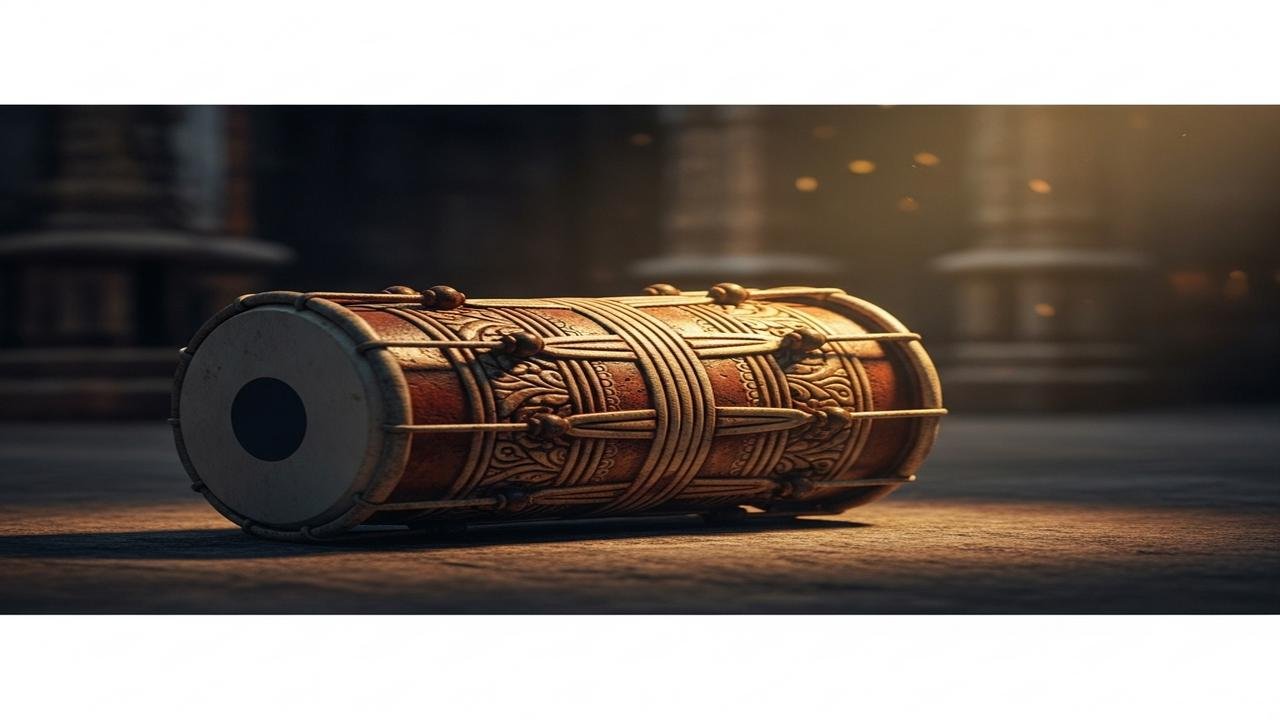
The word damaru (sometimes written damru) names a small double-headed hand-drum with a narrow waist. Typical features:
- Shape: an hourglass form with two membranes stretched over the ends.
- Materials: wood, leather, sometimes metal; in Himalayan and Tibetan contexts skull-cups (kapala) are used in tantric variants.
- Playing mechanism: short cords or leather thongs with small beads are attached to the waist; when the drum is twisted, the beads strike the membranes to produce rhythmic snaps.
- Size: small enough to be hand-held; proportions vary by region and ritual use.
How it is played
- Hold the handle between thumb and fingers and give a twisting motion so the attached beads swing out and strike the two skins alternately.
- Variation in leather tension, bead weight, and twisting speed changes tone and rhythm.
- Because sound is produced by the impact of beads, not sustained vibration, the damaru gives short, dry, crisp beats rather than resonant sustains.
Damaru in texts and myth
The damaru appears repeatedly in Puranic, tantric and popular accounts, though exact wording and emphasis vary. Two recurring themes are notable.
- Creation by sound: In several Śaiva and Puranic narratives, when Shiva strikes the damaru the primordial sound issues forth and the cosmos is generated. Versions of this motif claim the damaru’s beats produced the letters of the Sanskrit alphabet, the Vedas, or the syllable AUM — the seed of speech and the cosmic vibration (nada — primordial sound).
- Rhythm of time: Linked to Shiva’s dance, the damaru marks the cyclical rise and fall of the world — rhythm as the pulse of creation and destruction. Nataraja’s raised right hand holds the drum that sets the tempo of cosmic movement.
Scholars caution against treating any single text as the final word. Different Puranas, Tantra manuals and regional stories adapt the damaru motif for theological aims — some emphasise revelation and language, others renunciation and the breaking of samsara. Devotional poets and temple traditions also add layers of meaning not recorded in scripture.
Interpretations across traditions
The damaru functions as a multi-valent symbol and is read in several complementary ways:
- Śaiva readings: emphasize the damaru as instrument of the divine word and cosmic rhythm; the sound manifests reality.
- Śakta and tantric readings: sometimes focus on the damaru’s power in ritual — a sound that stirs subtle energies; in Himalayan contexts, skull-cup drums enrich the symbolism of transgression and transformation.
- Buddhist tantric contexts: the damaru (often called hand-drum) accompanies mantric recitation and has its own ritual grammar; its use and iconography may differ from Indian Śaiva models.
- Popular/folk readings: by mendicants and singers, the damaru is a practical accompaniment to songs, storytelling and procession, carrying sacred meaning in plain sight.
None of these readings completely excludes the others; the instrument’s ambiguity is part of its power.
Ritual life and popular practice
The damaru is used in a range of settings:
- Temple iconography: held by idols and bronzes of Shiva, especially Nataraja.
- Tantric rites: handheld drums may be used in specific recitations, often paired with bell, vajra or other ritual implements.
- Mendicant and folk performance: sadhus, aghori and itinerant musicians use damaru in bhajan, kirtan and narrative songs.
- Festivals: the damaru is symbolically present at Shiva-related festivals such as Maha Shivaratri (date varies each year by lunar tithi) and in local rites that emphasize sound and rhythm.
If you plan to participate in or adopt ritual practices that include prolonged wakefulness, breathwork or dietary restrictions commonly associated with some sects, consult a physician or experienced teacher; some practices can affect health.
Variations and a quick comparison
- Indian damaru: usually wooden, two small heads, bead-thongs, used in devotional and ritual contexts.
- Tibetan damaru: sometimes uses plates or skulls as shells, decorated with tantric iconography, paired with bell in ritual.
- Other drums: don’t conflate the damaru with larger drums such as mridangam or pakhawaj — those are structurally different and serve different musical roles.
Why the mystery endures
The damaru’s enduring fascination comes from the intersection of the concrete and the metaphysical. It is a small, simple instrument whose sound is immediate and ordinary; yet within the same instrument are stories about language itself, the first vibration that made worlds, and the rhythm that keeps time in a universe of cycles. Different communities — scripture-writing pandits, tantric adepts, villagers, temple priests and modern devotees — read the instrument in ways that suit devotional needs, ritual effectiveness, or poetic imagination.
That multiplicity is not a weakness but a feature. The damaru serves as a reminder that many Hindu symbols work by accommodating layers of meaning: technical, aesthetic, ethical and mystical. To ask “What does the damaru mean?” is therefore to enter a conversation that is still ongoing — a conversation shaped as much by music and practice as by scripture.
