
Dussehra Special: 10 Baby Names That Signify the Victory of Good Over Evil

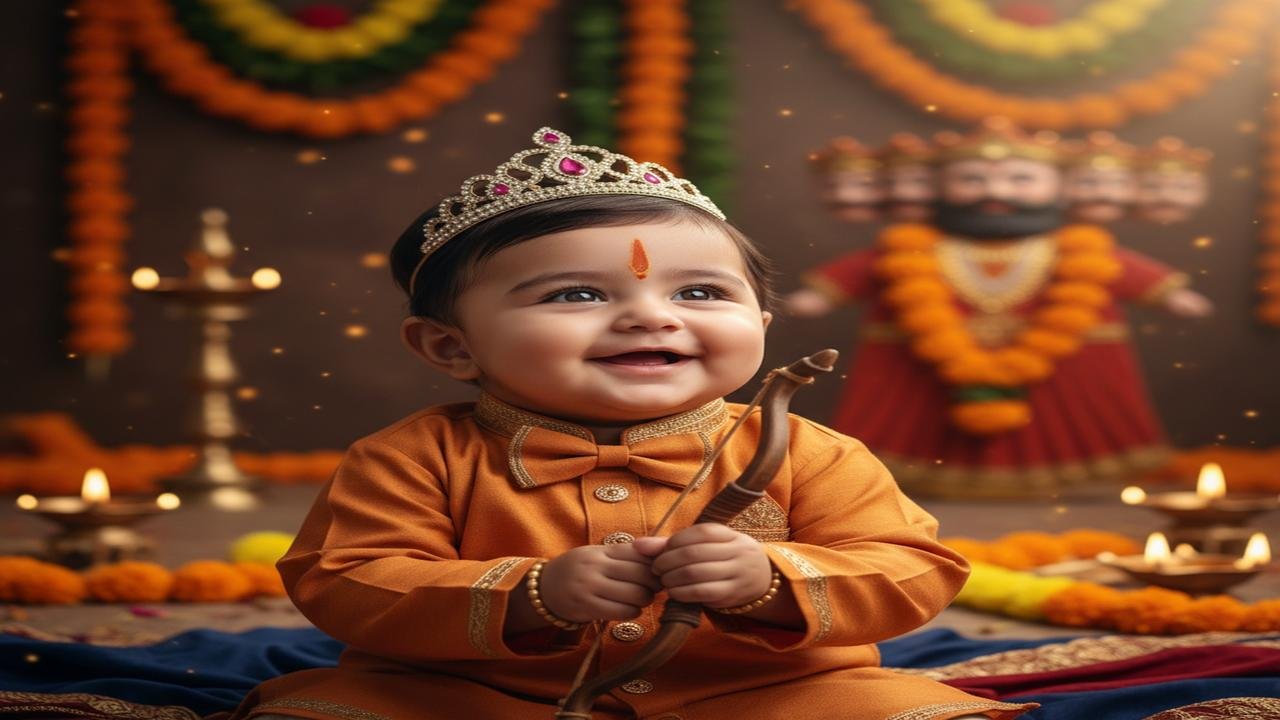
Vijayadashami and the theme of victory
Vijayadashami (the tenth day of victory) marks the triumph of good over evil in several Hindu traditions. In the north and many Vaishnava communities it commemorates Rāma’s victory over Rāvaṇa in the Rāmāyaṇa; in Shākta traditions it celebrates Durgā’s slaying of Mahishāsura. Across schools the festival signals the end of Navarātra (nine nights) and is an auspicious day to begin learning or new ventures — a practice called vidyārambha (beginning of education).
This Dussehra special presents ten baby names connected to that theme — meanings, linguistic roots, scriptural or mythic associations, and short notes on use. I try to be descriptive and non-sectarian; where traditions differ I indicate the variant reading.
How to use these names
- Gender: Some names are traditionally masculine or feminine; several are commonly unisex today.
- Pronunciation and spelling: Sanskrit-origin names often have regional spellings and pronunciations; consider local usage.
- Timing: Many families choose Vijayadashami, an astrologically chosen tithi, or a naming ceremony for a namakaran on an auspicious day.
- Health note: If you plan religious fasts or strenuous rituals during naming events, consult a doctor if you have health concerns.
Ten names that signify victory or the triumph of virtue
1. Vijay (विजय)
- Meaning: “Victory.”
- Origin: Sanskrit root ji (to conquer). Common across India; masculine.
- Associations: Generic word for victory; used in inscriptions and modern names. Neutral religious associations make it widely acceptable across communities.
- Notes: Short forms: Viju, Vij.
2. Vijaya (विजया)
- Meaning: “Victory”; feminine form of Vijay.
- Origin & context: In some Puranic passages, Vijaya is also a name used for a personified victory or for certain goddesses. Often chosen for girls born on Vijayadashami.
- Notes: Classical usage appears in inscriptions and literature; popular in many Indian languages.
3. Jaya (जया)
- Meaning: “Victorious,” “victory.”
- Origin & associations: Used in Vedic and Purāṇic contexts; in the Mahābhārata the opening has the word “Jaya.” Also used as a name of the goddess and as a unisex given name.
- Notes: Short, traditional, and ecumenical across sects.
4. Jayant (जयन्त)
- Meaning: “Victorious,” “one who is triumphant.”
- Origin: Sanskrit adjectival form often used as a masculine name. In some texts Jayanta is a son of Indra; in others it appears as an epithet.
- Notes: Formal yet familiar; diminutive “Jayan.”
5. Ajay (अजय)
- Meaning: “Unconquered,” “invincible.”
- Origin & scriptural tone: Combines negative prefix a- (not) with jay (victory). In epic and devotional literature it can describe heroic or divine qualities.
- Notes: Very common modern male name; conveys resilience rather than a single martial triumph.
6. Rāma (राम)
- Meaning: “Pleasing,” “delightful” (etymology debated); historically the hero-king of the Rāmāyaṇa.
- Associations: Central figure in Vaishnava devotion. Rāma’s defeat of Rāvaṇa is the canonical Dussehra theme in many regions.
- Notes: Deeply reverential name in many communities; widely used as a given name and as part of compound names (e.g., Rāmakrishna).
7. Sītā (सीता)
- Meaning: “Furrow” (agricultural metaphor); classical consort of Rāma in the Rāmāyaṇa.
- Associations: Represents steadfastness, fidelity, and the triumph of dharma (ethical duty). In many narratives her endurance and moral strength are read as a form of victory.
- Notes: Janaki (daughter of Janaka) is a common epithet; Sītā remains an established feminine name across India.
8. Durgā (दुर्गा)
- Meaning: “Inaccessible,” “fortress” — metaphorically, she removes obstacles and defeats demons.
- Associations: Principal goddess in Shākta and many Smārta traditions; her slaying of Mahishāsura is celebrated during Navarātra and culminates on Vijayadashami.
- Notes: Strong theistic and festival associations; widely used as a feminine name and in devotional contexts.
9. Hanumān (हनुमान)
- Meaning: Etymology debated; a central figure in the Rāmāyaṇa, exemplar of devotion (bhakti) and service.
- Associations: Celebrated for courage, loyalty and strength; his role in Rāma’s victory makes this name resonate with Dussehra themes.
- Notes: Often used in masculine names; highly revered across Vaishnava and other communities.
10. Śakti (शक्ति)
- Meaning: “Power,” “energy.”
- Associations: Philosophically central in Śākta and Tantric traditions as the active principle; in popular devotion it stands for the divine power that defeats ignorance and evil.
- Notes: Used as a feminine given name and as part of compound names (e.g., Śaktipriya). Evokes spiritual potency rather than a single mythic episode.
Final considerations
Choosing a name tied to Dussehra’s theme honors a layered Indian tradition: mythic stories, ethical ideals like dharma (moral duty), and communal practices such as starting new learning on Vijayadashami. Families may prefer names that reflect local language, family lineage, horoscope syllables, or devotional allegiance; each of these factors affects choice.
Where meanings or associations are contested, it’s useful to ask local elders or temple scholars about readings and pronunciations familiar in your region. Names that signify victory can celebrate resilience, virtue, and service rather than triumphalism — values many families hope to pass to the next generation.
