
Hare Krishna Mahamantra: The 16-Word Chant Explained

What the Hare Krishna Mahamantra is
The phrase commonly called the Mahamantra — “Hare Krishna Hare Krishna, Krishna Krishna Hare Hare, Hare Rama Hare Rama, Rama Rama Hare Hare” — is a sixteen-word devotional chant used widely across modern Vaiṣṇava communities and beyond. Literally, mahā means “great,” so Mahamantra can be read as “the great mantra.” The words invoke “Krishna” and “Rama” (names of the Divine) and “Hare,” a vocative that traditions interpret as either an address to the divine energy of God (often linked to Radha or Hara) or as a call to the Lord’s mercy.
Historical and textual background
The specific sixteen-word arrangement gained prominence in late medieval and early modern devotional movements, especially in the Gaudiya Vaiṣṇava tradition that traces its public propagation to Śrī Caitanya Mahāprabhu (1486–1534). Caitanya popularised congregational chanting, or nama-sankirtana — public singing of God’s names — as a primary means of devotion in the Kali age. Many Gaudiya and related Vaiṣṇava teachers hold that the Mahamantra was prescribed in texts such as the Kali-Santarana Upanishad, though scholarly and traditional views vary about the dating and authority of that Upanishad.
In the 20th century the chant reached a new global audience through the International Society for Krishna Consciousness (ISKCON), founded by A.C. Bhaktivedanta Swami Prabhupada in 1966. ISKCON’s public kirtans, books, and temple communities made the mantra familiar in urban streets, campuses and festivals worldwide.
Different spiritual meanings across traditions
Interpretation of the mantra is not uniform. Some common emphases:
- Bhakti devotional view: In many Vaiṣṇava schools the mantra is a direct address to the Lord and His energy; chanting is an act of loving service (respectively called bhakti). The name is considered non-different from the named, so repeating the name brings one into contact with the divine presence.
- Sound and meditative view: Some contemplative readers highlight the mantra’s sonic quality, seeing it as a form of nāda (primordial sound) that focuses attention and stabilises the mind.
- Social and ethical view: In Caitanya’s movement, chanting was also a communal and reforming practice — a way to equalise caste differences, promote moral life and bind communities in shared devotion.
- Critical or comparative perspectives: Scholars note that public name-chanting has parallels in many religions; they emphasise historical development and textual layers rather than metaphysical claims.
How the mantra is practised
Two common modes of practice are:
- Kirtan: Congregational, musical chanting often led by instruments (mrdanga, karatals) and call-and-response singing. Kirtan emphasises mood, rhythm and communal energy.
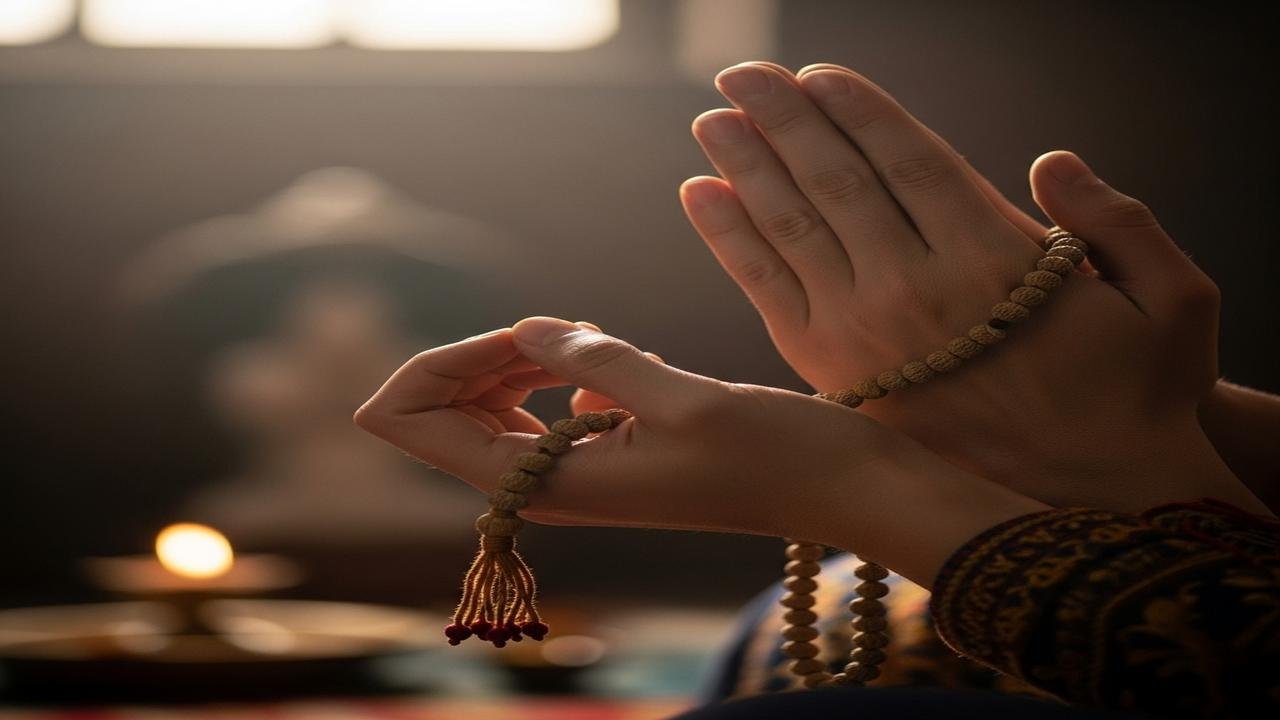
- Japa: Silent or whispered repetition, typically on a rosary of 108 beads (japa mala), where one counts recitations for set rounds. Japa is usually more solitary and contemplative.
Practical elements often observed in communities include fixed daily rounds of japa, public street-kirtans, temple services and special festival kirtans (for example, on Gaura Purnima, which commemorates Caitanya’s birth). The tempo, melody and language of kirtans vary widely by region and community.
Why people chant — spiritual aims and experiences
Devotees describe varied goals: awakening love for the Divine, purifying the heart, settling the mind, or fulfilling scriptural injunctions. In Vaiṣṇava theology, chanting is both means and end: it is a practice through which the heart becomes receptive to divine grace. Other traditions may prioritise chanting as one among many spiritual tools.
Experiences reported in kirtan settings range from joyful ecstasy and tears to quieter feelings of peace and focused presence. Interpretations of these states differ: some schools read them as signs of genuine devotion, others as transient affective states within a broader spiritual discipline.
Practical notes for someone wanting to try it
- Begin simply — try a short sitting (10–20 minutes) for japa or attend a local kirtan to hear group singing.
- If using a japa mala, one round of 108 names is common; beginners can set smaller targets and increase gradually.
- Respect community norms: temples and sanghas have practices and protocols; ask before joining rituals.
- There are no universal “correct” tunes — styles vary by region and lineage. Focus on sincerity rather than perfection.
- Caution: prolonged breath-restricting practices or exhaustive kirtans can affect physical health; consult a teacher or medical professional if you have respiratory or cardiac conditions.
Cultural and social significance
The Mahamantra has moved beyond temple walls into streets, trains, universities and international festivals. In India it is part of living devotional life in many urban and rural contexts. It has also raised questions about appropriation and interpretation abroad; different communities maintain distinct ritual etiquettes and theological emphases.
Scholarly humility and devotional plurality
Any account of the Mahamantra must balance devotional claims with historical analysis. Devotees often treat the name as metaphysically potent; historians and philologists trace textual and social trajectories. Both perspectives illuminate aspects of the chant’s power and spread. Across Śaiva, Śākta and Smārta traditions, public chanting of divine names exists in other forms, showing a wider subcontinental pattern of name-based devotion.
Conclusion
The Hare Krishna Mahamantra is at once a concise devotional formula, a musical practice and a social phenomenon. It remains significant because it meets human aspirations for connection, rhythm and community—whether experienced as the sound of the sacred, an ethical discipline, or an expression of love. For those exploring it, a respectful teacher, modest beginnings and attention to one’s health are wise companions on the path.
