
Janaka The King Who Embodied Detached Duty In The Gita

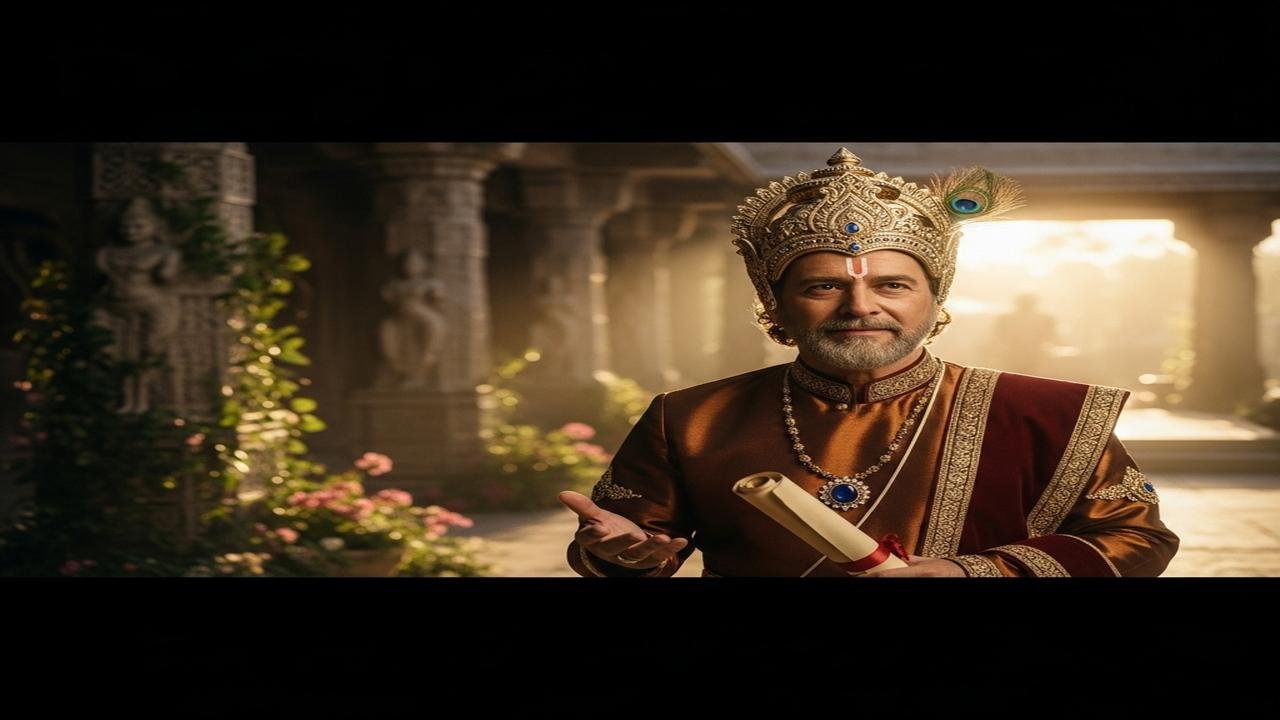
Janaka: the king who embodied detached duty
In many strands of Hindu thought, King Janaka is held up as the paradigm of a ruler who performs his responsibilities fully, yet without attachment to results. That combination — active engagement with the world while remaining inwardly free — is central to Krishna’s ethical teaching and to later commentarial traditions that link Krishna’s message to Janaka’s life. This article traces how Janaka functions as an exemplar for the idea of duty, or dharma — ethical obligation — and what different traditions draw from that example.
Where Janaka appears in the texts
Janaka figures across several classical works. Two key strands are often cited:
- Ashtavakra Gita: A short, aphoristic dialogue in which Janaka asks the sage Ashtavakra about the nature of the Self. Janaka appears here not merely as a king but as a sincere spiritual seeker and, in some readings, as an awakened master who continues to rule.
- Puranas and the Mahābhārata: Various Puranic narratives and sections of the Mahābhārata (notably in the discursive portions such as the Shanti Parva) present Janaka as the ideal king — a person who performs rajadharma (kingly duty) while maintaining inner equilibrium.
Different schools highlight different aspects: Vedāntic and Advaita commentators stress Janaka’s realization of the Self; Vaiṣṇava writers may emphasise his devotion and service. The layered presence of Janaka in both spiritual and royal texts is what makes him a convenient human example of Krishna’s teaching on duty.
Krishna’s teaching on duty: a quick reminder
In the Bhagavad Gita, Krishna instructs Arjuna to act, but to relinquish attachment to the fruits of action — the core of what later readers call nishkama karma (desireless action). The famous line in the Gita — often cited as “do your work, but do not be attached to the results” (Bhagavad Gita 2.47) — captures this balance between engagement and detachment. Across commentary traditions, this ideal is not passive renunciation but a disciplined, morally grounded activity.
How Janaka illustrates Krishna’s message
Janaka functions as an illustration of Krishna’s model in three overlapping ways:
- Practical duty performed well: Janaka is the king who does what is necessary for his realm — law, justice, governance — without letting the pursuit of power or reward cloud his inner life. This is a concrete model of acting in accordance with one’s role, which Krishna upholds as essential to social and cosmic order.
- Detachment amidst responsibility: In the Ashtavakra Gita and in later retellings, Janaka’s heart is steady even as he meets the obligations of rulership. That steadiness is what commentators link to the Gita’s call to act without coveting the fruits.
- Knowledge integrated with action: For many Vedāntic readers, Janaka is not merely dutiful but also a jnani — one who knows the Self. His life suggests that spiritual insight need not exclude social responsibility; rather, wisdom can inform how duty is performed.
Variations in interpretation
Scholars and religious traditions read Janaka through different lenses:
- Advaita/Vedānta: Janaka is often an ideal of nondual realization who remains active in the world. His case supports the view that enlightenment does not require withdrawal from duty.
- Vaiṣṇava readings: While admiring his detachment, some Vaiṣṇava writers stress devotion (bhakti) as the inner motive that sustains right action; Janaka becomes an exemplar of acting in devotion to the Divine.
- Late Puranic and ethical texts: These traditions emphasise practical governance: Janaka’s fairness, impartiality, and attention to Dharma are the lessons for rulers and officials.
These readings are complementary rather than strictly exclusive. Across schools, Janaka’s story is used to show that ethical competence, spiritual maturity, and administrative skill can coexist.
What modern readers can take from Janaka and Krishna
For people today — public servants, professionals, family members — Janaka’s example, as read alongside Krishna’s teaching, suggests a few practical lessons:
- Do the work assigned to you: Fulfilling your role faithfully is itself valuable. That may mean meeting professional duties, caring for family obligations, or participating in civic life.
- Cultivate inward calm: Detachment here does not mean indifference; it means maintaining perspective so that success or failure does not define you.
- Let ethical knowledge shape action: Learning and reflection should inform how you act — whether through legal frameworks, ethical norms, or spiritual practice.
- Balance action with reflection: Make time for study, counsel, and self-examination so that action remains wise rather than merely habitual.
Cautions and contextual notes
Janaka’s ideal should not be romanticised into model behaviour for all situations. A king’s duties in ancient texts presuppose social structures that differ from modern democracies. Also, spiritual practices such as prolonged fasting or extreme asceticism — sometimes associated with ancient renunciates — can affect health; if one considers such practices, consult knowledgeable, qualified teachers and health professionals before undertaking them.
Finally, remember that scriptural exemplars serve multiple kinds of teaching: moral, political, and spiritual. Krishna’s ethical message about duty finds a vivid human face in Janaka, but the precise emphasis differs across interpreters. Reading Janaka alongside the Gita invites reflection rather than a single prescriptive programme: it asks how to act well in the world while keeping the inner life intact.
Conclusion
Whether read through the Gita’s aphorisms, the Ashtavakra dialogues, or Puranic narratives of kingship, Janaka remains a powerful image of duty informed by wisdom. Krishna’s counsel to act without clinging to results finds a practical counterpart in Janaka’s life: committed action guided by inner freedom. For many seekers and citizens, that remains a timely reminder — that the truest form of service combines competence, conscience, and calm.
