
Krishna’s Guide To Meditation In Bhagavad Gita Chapter 6

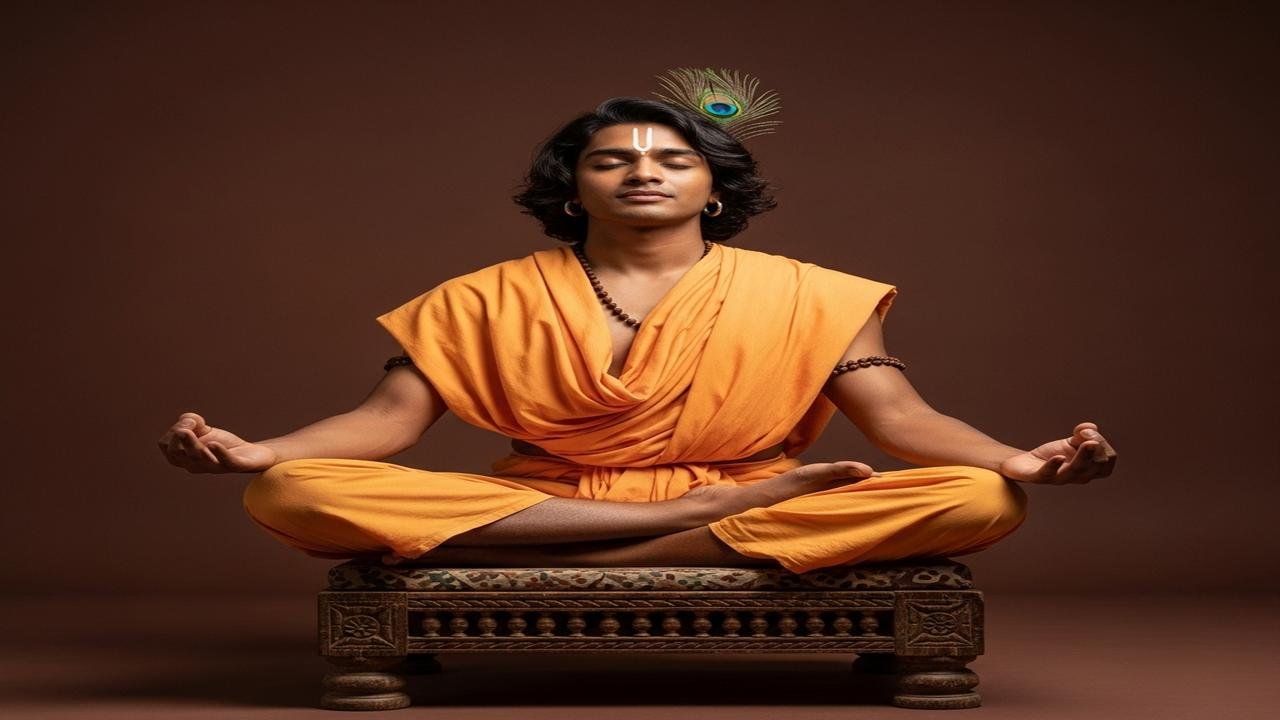
Introduction — What Krishna meant by meditation
When Krishna speaks about the discipline of meditation in the Bhagavad Gītā, he addresses it as a systematic practice embedded in ethics, breath regulation and steady attention. The Gītā does not present meditation as a mere technique; it frames it as part of a larger path that includes right action, self-control and devotion. Different Hindu traditions read these verses in varied ways — some emphasize contemplative absorption, others the meditative remembrance of the Lord — but the practical contours of the discipline remain recognisable across readings.
Core points in Krishna’s teaching (Bhagavad Gītā)
Key verses on meditation appear mainly in Chapter 6 (often called dhyāna-yoga — the yoga of meditation). The essentials Krishna gives are:
- A suitable seat and posture: sit in a clean, steady place, neither too strict nor too lax. Balance and comfort are important so the body does not distract the mind (Gītā 6.11–12).
- Regulated breath and food: moderation is stressed — not too much sleep, food or activity. Krishna explicitly warns against extremes (Gītā 6.16–18).
- Sense withdrawal: draw the senses inward so attention can focus (this echoes the classical notion of pratyāhāra — withdrawal of the senses).
- One-pointedness: cultivate sustained attention and bring the scattered mind back without harshness (a disciplined yet gentle effort).
- Progress is gradual: results come through steady practice; the mind becomes a friend when trained, or an enemy if neglected (Gītā 6.5–6).
- Goal orientation: meditation aims at self-knowledge, equanimity and ultimately union with the object of meditation — for some, Brahman; for others, Krishna himself (Gītā 6.19–23, 6.29).
How different traditions read Krishna’s meditation
Interpretations vary but remain respectful of Krishna’s authority. For example:
- Advaita (non-dual) readings: Many commentators who follow Śaṅkara read Gītā meditation as a means to realise the underlying oneness of the self (ātman) and Brahman. Meditative steadiness leads to discriminative knowledge (viveka).
- Vaiṣṇava and Bhakti readings: In Vaiṣṇava schools (including Gaudiya) meditation often becomes the centered remembrance of Krishna — visualisation, chanting and loving contemplation that deepen devotion (bhakti).
- Yoga and Sāṅkhya perspectives: These emphasise mental discipline, ethical supports and the mechanics of attention; they read Krishna’s lines alongside Patañjali’s Yoga ideas about concentration and absorption.
Practical disciplines drawn from Krishna’s instruction
Here are compact, practice-oriented steps that reflect Krishna’s guidance and the wider classical tradition. These are general pointers rather than prescriptive rituals; practitioners often adapt them under a teacher’s guidance.
- Prepare the setting: choose a clean, quiet spot and sit comfortably. Keep the spine upright and body relaxed.
- Regulate daily rhythms: maintain moderate sleep and simple, nutritious food. Avoid extremes that disturb the body or mind.
- Begin with breath awareness: observe the breath to settle attention. Traditional pranayama is taught with care — learn from a teacher and avoid forcing breathwork aggressively.
- Withdraw the senses: gently turn attention inward, disengaging from sensory distractions.
- Focus the mind: hold attention on a chosen point — breath, a mantra, a visualised form of the deity, or the inner Self. When the mind wanders, bring it back without judgment.
- Build length and regularity: short daily practice sustained over months is usually more effective than occasional long sessions.
- Integrate ethics and devotion: Krishna’s meditation does not stand apart from ethical living (dharma) or the heart’s orientation toward the divine. Compassion and steadiness support deeper concentration.
Obstacles and Krishna’s practical counsel
Krishna recognises common obstacles: restlessness, laziness, pride, attachment and distraction. His practical tone is worth noting:
- He advises gentle, consistent effort rather than severity — harsh austerity is likely to break the practice (Gītā 6.16).
- Self-help, he says, begins with disciplining the mind: uplift yourself with your own mind or let it degrade you; the mind is both friend and foe (Gītā 6.5–6).
- He emphasises patience: transformation is gradual; steadiness (sthitaprajña or equanimity) is cultivated over time.
Complementary sources and modern practice
Krishna’s instruction in the Gītā sits within a broader classical conversation. The Patañjali Yogasūtra, the Upaniṣads and later devotional texts such as the Bhāgavata Purāṇa add technical, philosophical and devotional depth. Contemporary teachers — from traditional lineages as well as secular teachers informed by classical texts — typically blend ethical foundation, breath practice, concentration exercises and devotional focus.
Practical cautions
If you have respiratory, cardiovascular, psychiatric or other medical conditions, consult a qualified teacher and a healthcare professional before attempting intensive breathwork, fasting or extended solitary practices. Meditation can be deep and sometimes unsettling; practising with a teacher or within a community can provide support.
Conclusion — A discipline of steadiness, not spectacle
Krishna presents meditation as a patient discipline anchored in ethical life, measured habits and steady attention. Whether read as a path to non-dual knowledge, a method to deepen devotion to Krishna, or a technique to stabilise the mind, the core message is similar: small, consistent efforts, guided by moderation and compassion, transform the restless mind into an ally. The Gītā offers clear practical markers — posture, moderation, withdrawal of the senses, single-pointed focus — while leaving room for diverse devotional and philosophical paths to interpret the ultimate aim.
Practise carefully, seek instruction from trusted teachers in your tradition, and let the social and ethical context of your life support the inner discipline Krishna describes.
