
Saptapadi: Seven Steps, Agni as Witness and Shared Vows

Opening observation
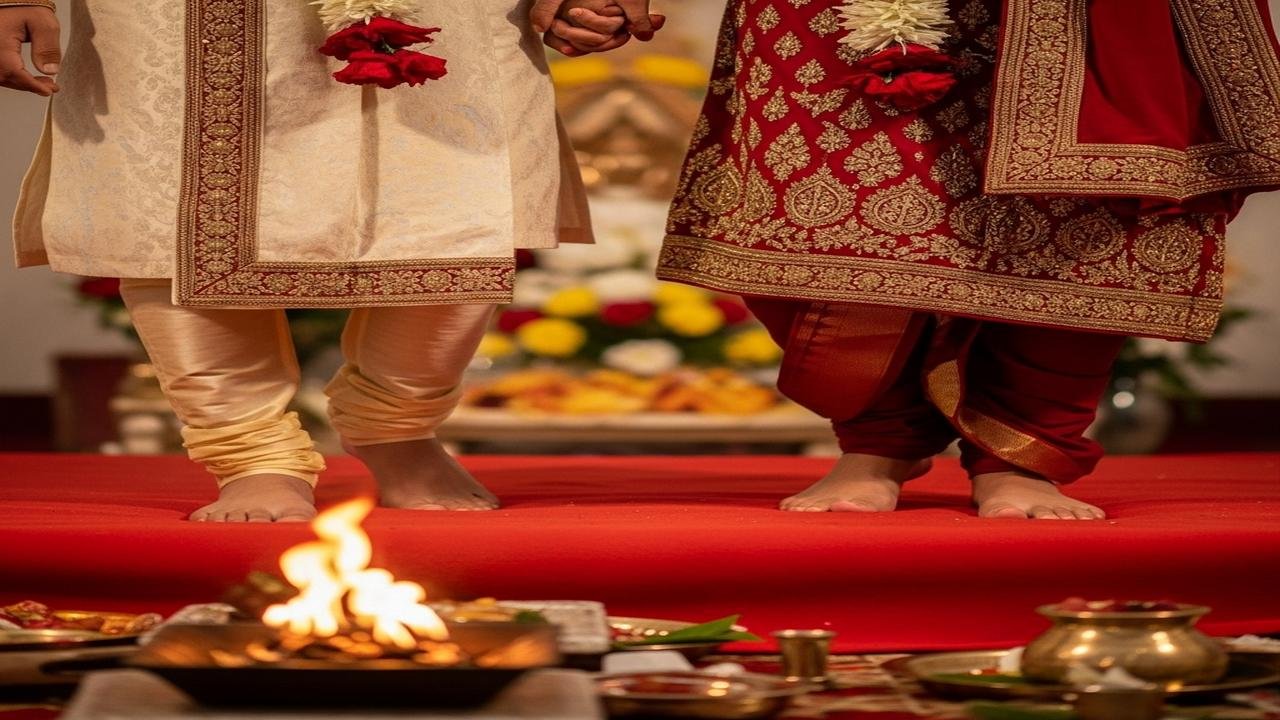
The moment when a bride and groom take the seven steps together around the sacred fire is one of the most recognisable images of a Hindu wedding. Known as saptapadi — literally “seven steps” — this rite appears simple and rhythmic, but it carries many overlapping meanings: legal, cosmological, ethical, social and personal. Different regions, texts and communities read those seven steps in different ways, and those differences are part of the ritual’s richness rather than contradictions.
What is saptapadi?
Saptapadi (seven steps) normally takes place with the couple circling the sacred fire, Agni — “fire” — as witness. At each step the priest or the couple pronounce a vow. In many traditions the seventh step is considered the decisive act that completes the marriage. The practice is described in the classical householder manuals, the grihya sūtras (household rites texts), and survives in regional ritual forms found across South Asia.
Typical elements
- Couple moves together, step by step, around the fire.
- Each step is accompanied by a short vow or benediction of mutual support.
- The fire acts as sacred witness and purifier.
- In many South Indian traditions the seven steps conclude the marriage; in other regions the number and sequence of circumambulations (pheras) may vary.
Layers of meaning
Reading the saptapadi closely reveals several symbolic registers that the ritual is built to hold simultaneously.
1. Legal and contractual
On a practical level, saptapadi functions as a public affirmation that makes the marriage binding. In many communities the seven vows are the explicit terms of a life contract: promises about mutual care, household responsibilities, and raising a family. Traditional ritual manuals treat the act of walking the steps as the completion of the marriage samskara (rite of passage) for the household stage, grihastha.
2. Cosmological and sacramental
With Agni present, the ritual is placed in a cosmological frame. Fire acts as mediator between humans and gods in many Vedic rites; its presence turns a private agreement into a covenant witnessed by the divine order. Numerology also matters: the number seven echoes the seven worlds (sapta lokas), seven seers (sapta ṛṣis), and other symbolic septets that suggest the marriage participates in cosmic harmony.
3. Ethical and life-stage mapping
Beyond immediate promises, the vows often map onto key human aims — roughly aligning with the classical aims of life such as dharma — ethical duty, artha — livelihood, kāma — relational pleasure, and implicitly mokṣa — spiritual striving. In this way saptapadi situates the couple’s relationship within a broader ethical trajectory rather than leaving it purely private.
4. Psychological and relational
Many contemporary readers focus on the psychodynamic image: two people taking steps in the same direction. The rhythm and mutual support of stepping together symbolise shared responsibility, trust, and the negotiated give-and-take of partnership. Modern couples often emphasise mutuality in rewording vows to reflect partnership rather than hierarchy.
5. Energetic and body-symbolism
Some interpretive streams (including certain tantric and popular readings) associate the seven steps with the body’s energetic centres or with stages of bonding and maturity. These readings are modern overlays in many cases, but they show how ritual language remains open to renewed meaning.
Variations across texts and regions
The details of saptapadi vary considerably.
- Classical grihya sūtras (for example the Baudhayana and Apastamba traditions) present forms that make the steps essential to the marital rite, though precise formulas differ among schools.
- In North India the ritual of seven circumambulations (pherā) is widespread; the wording and emphasis of vows can differ from southern saptapadi forms.
- In some communities the first four or five rounds are highlighted for particular promises, while the final step is regarded as legally decisive.
- Modern urban weddings often adapt space constraints: symbolic saptapadi without a full homa (fire ritual) is common, and civil or interfaith marriages may substitute comparable public affirmation.
Contemporary meanings and conversations
Today saptapadi is a site of active reinterpretation and debate:
- Equality and gender: Many couples and priests now read the vows through the lens of companionship and shared duties rather than unilateral obligations. Some communities have formally rewritten vows to make them reciprocal.
- Legal recognition: Practically, in many social and legal contexts the public ritual of saptapadi is treated as the completion of marriage; judges and registrars may look to the presence or absence of these rites when assessing marital status in disputes.
- Heritage and modernity: Urban couples negotiate between preserving a sense of continuity and adapting rituals to present-day values—sometimes keeping traditional language, other times creating translated, mutual-text versions.
How to read saptapadi today: a short guide
- See it as multilayered: legal, social and spiritual meanings can coexist without cancelling one another.
- Ask about local wording: vow texts differ; learning the specific promises can reveal what a community values most.
- Consider intentional rephrasing: many couples respectfully update wording to reflect mutuality while keeping the ritual’s symbolic form.
- Respect tradition and diversity: different sects (Śaiva, Vaiṣṇava, Śākta, Smārta) and regional practices legitimate different emphases—none is the single “authentic” meaning.
Closing note: Saptapadi’s durability lies in its pliability. The simplicity of two people taking seven steps beside a witness-fire lets communities and couples inscribe varied ethical, cosmological and personal meanings into the same act. Its continuing power is not that it dictates a single truth, but that it invites repeated reinterpretation across generations.
