
Top 5 Baby Boy Names inspired by Lord Hanuman’s Loyalty

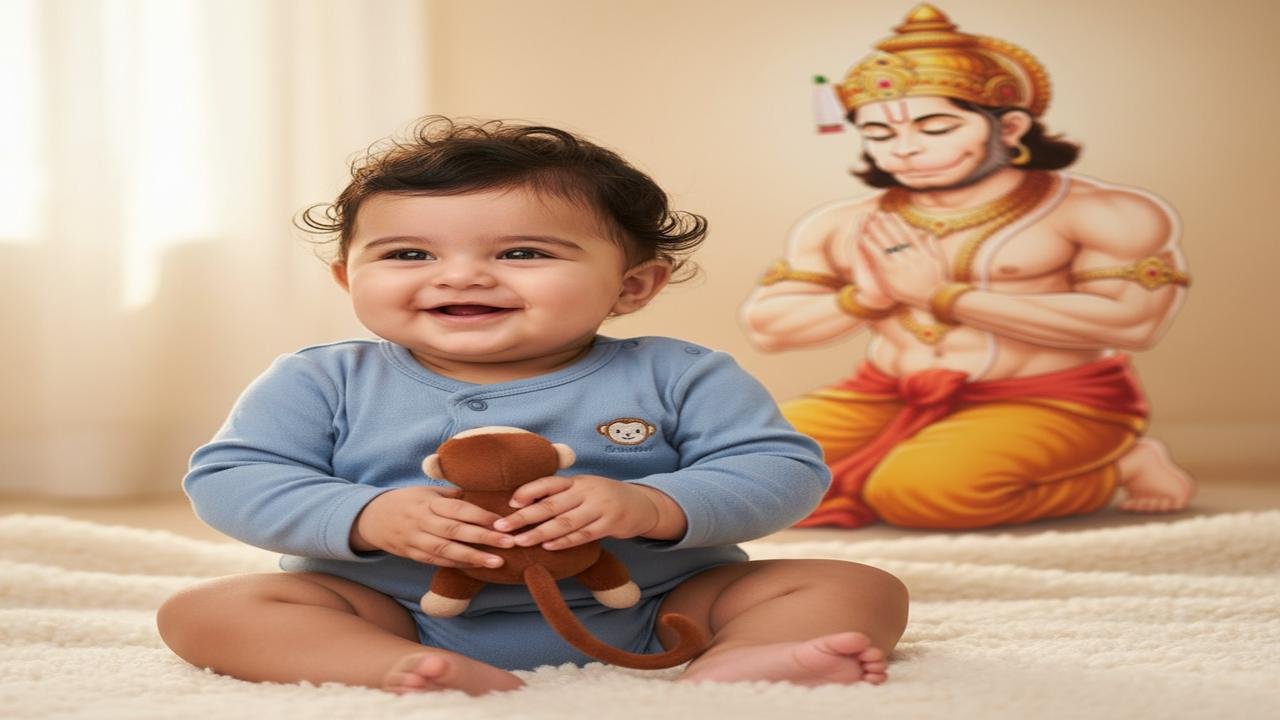
## Why choose a Hanuman-inspired name?
Lord Hanuman is widely remembered for his single-minded *bhakti* — devotion — to Rāma. Across texts and living traditions, his loyalty is framed as steady courage, selfless service and unshakable duty (*dharma* — ethical duty). The Ramāyaṇa (especially the Sundara Kāṇda) and later devotional works such as Tulsidas’s Rāmcharitmānas celebrate these qualities; some Puranic layers and regional traditions also identify Hanuman with aspects of Śiva or as an independent devotional ideal. Choosing a name linked to Hanuman can signal a wish that a child embody steadfastness, courage and devoted service. Below are five names that express different facets of Hanuman’s loyalty, with meanings, scriptural notes and practical naming tips.
—
## 1. Anjaneya — “son of Anjana”
– Meaning and etymology: *Anjaneya* (Anjaneya) — literally “son of Anjana,” the name of Hanuman’s mother.
– Scriptural echoes: The epithet appears across the Rāmāyaṇa and in many devotional hymns and regional folklore. The Sundara Kāṇda narrates Hanuman’s mission to Lanka and highlights his devoted service to Rāma.
– Why it evokes loyalty: The name ties Hanuman to his origin and human dimension, suggesting humility and familial devotion together with heroic service.
– Pronunciation and nicknames: AN-ja-ney-a; nicknames: Anju, Jeya, Neey.
– Cultural note: Widely used across South and North India; respectful and conventional as a given name.
—
## 2. Pavanputra / Pavanaputra — “son of the wind”
– Meaning and etymology: *Pavanputra* (Pavanaputra) — *pavan* = wind; *putra* = son; i.e., son of Vāyu (the wind god).
– Scriptural echoes: The Rāmāyaṇa and several Purāṇas describe Hanuman as the son of Vāyu, which explains his extraordinary speed, strength and vitality.
– Why it evokes loyalty: The name highlights life-force and sustained effort — the elemental support behind Hanuman’s devotion and service to Rāma.
– Pronunciation and nicknames: PA-van-put-ra; nicknames: Pavan, Putra, Vayu.
– Regional usage: Common in Marathi, Hindi and some South Indian naming patterns.
—
## 3. Bajranga / Bajrangbali — “one with limbs like thunderbolt”
– Meaning and etymology: *Bajranga* or *Bajrangbali* — from *vajra* (thunderbolt, symbolic of strength) + *anga* (limb); “one whose limbs are like a thunderbolt.”
– Scriptural and devotional echoes: Popular in folk and devotional contexts (for instance, the Hanuman Chalisa celebrates his valor and might). In many temples he is venerated as a protector who uses strength to uphold righteousness.
– Why it evokes loyalty: The name stresses protective strength used in loyal service — physical courage offered in the service of a just cause.
– Pronunciation and nicknames: BAJ-rang or BAJ-ran-g-ba-li; nicknames: Bajrang, Baju.
– Cultural note: Often used in North India; the suffix “bali” is honorific.
—
## 4. Maruti — “son of the Marut (wind)” / “sprightly one”
– Meaning and etymology: *Maruti* — another form acknowledging Hanuman’s relation to the Maruts (wind deities) and connoting agility and life.
– Scriptural echoes: The term appears in classical literature and regional devotion. In several vernacular bhajans, Maruti is invoked as the swift messenger and loyal servant of Rāma.
– Why it evokes loyalty: Maruti suggests readiness to act and an energetic commitment to duty — the practical side of devotion.
– Pronunciation and nicknames: MA-ru-ti; nicknames: Maru, Ruti.
– Regional usage: Common in Maharashtra and South India.
—
## 5. Ramdas / Ramadatta — “servant of Rāma”
– Meaning and etymology: *Ramdas* (Rāmdās) or *Ramadatta* — *Rāma* + *dāsa*/*datta* meaning “servant” or “given (to Rāma).”
– Scriptural and historical echoes: Names that explicitly mark devotional allegiance have a long history; the 17th-century saint Samarth Rāmdās is a notable bearer. In Vaiṣṇava devotional streams, being a *dāsa* (servant) is a revered spiritual stance.
– Why it evokes loyalty: This is the most explicit naming choice for lifelong devotion — the name states allegiance to Rāma and, by extension, to Hanuman’s exemplary role as devoted servant.
– Pronunciation and nicknames: RAM-daas or RA-ma-datt; nicknames: Ram, Dasu.
– Cultural note: Particularly common among communities for whom devotional identity is emphasized; also used as a compound given name in many regions.
—
## Quick comparison
| Name | Core meaning | Scriptural / devotional source | Common nicknames |
|—|—:|—|—|
| Anjaneya | Son of Anjana | Rāmāyaṇa, devotional songs | Anju, Jeya |
| Pavanputra | Son of the wind | Rāmāyaṇa, Purāṇas | Pavan, Vayu |
| Bajranga | Thunderbolt-limbed hero | Bhakti hymns, folk tradition | Bajrang, Baju |
| Maruti | Wind-born, sprightly | Bhajans, regional lore | Maru |
| Ramdas | Servant of Rāma | Devotional tradition, saintly names | Ram, Dasu |
—
## Practical naming tips and cultural sensitivities
– Many Hindu families consult the child’s janma nakshatra (birth star) and choose a syllable accordingly; others prefer family or caste naming customs. Either approach is valid — be guided by family preference and the child’s welfare.
– If you choose a name with clear religious content (for example, Ramdas), be aware that it signals devotional identity; that can be a source of pride but also of public expectation.
– Some names (e.g., Mahavir) have important place in other traditions (Jainism). If a name has cross-religious importance, families often consider local sensitivities and personal meaning before finalising.
– Pronunciation: pick a variant that fits your region’s phonetics so the child does not face repeated corrections.
– Respectful use: These names commemorate a sacred figure; use them thoughtfully and explain the story and ideals behind the name to the child as they grow.
—
Choosing a Hanuman-inspired name is a way of naming for character as much as sound — an invitation to tenacity, service and moral courage. Different traditions and regions will emphasize different aspects of Hanuman’s persona; the five names above offer a range from explicit devotional identity (Ramdas) to symbolic attributes (Bajranga, Pavanputra).
