
Top Baby Names Inspired by Lord Rama’s Companions (Hanuman, Lakshmana, Bharat)

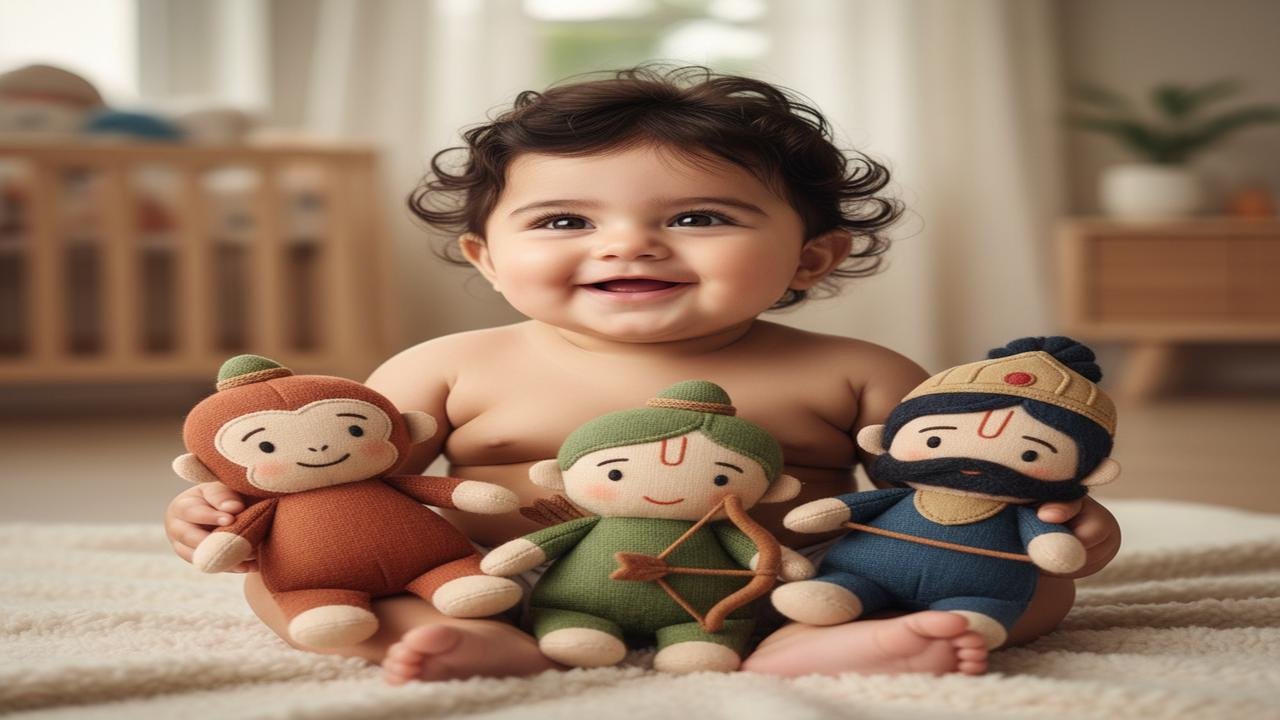
Why choose names from Rama’s companions?
Names drawn from the companions of Lord Rama carry narrative meaning and ethical associations. Rama’s circle—Hanuman, Lakshmana and Bharat—are celebrated across many Hindu traditions for qualities such as devotion, loyalty, courage and selfless service. Using these names can honour that moral resonance while remaining culturally rooted. Note that interpretations vary by region and sect: for example, Hanuman is particularly central in Vaishnava devotional practice, while Rama and his brothers are also commemorated widely in Smārta, Śaiva and other communities.
How to read the lists below
Each short entry gives: the name, a plain-English meaning, gender norms (traditional usage), a brief scriptural or textual reference where applicable, and practical notes (modern variants, nicknames, pronunciation hints). Sanskrit terms appear with a brief gloss on first use (for example, namakarana — naming ceremony).
Names inspired by Hanuman
- Hanuman — “one with prominent jaw/cheek”; the personal name of the vanara devotee of Rama. (Valmiki Rāmāyaṇa; also central to later Puranic and devotional literature). Traditional male name; common nicknames: Hanu. Pronunciation: Ha-nu-man.
- Anjaneya / Anjaniputra — “son of Anjana” (Anjana = mother of Hanuman). Scriptural link: used in Puranas and later devotional hymns. Male; modern variants: Anjani (often female), Anjaneeya.
- Pavanputra / Pavankumar — “son of the wind” (pavana = wind; Hanuman is often described as son of Vayu). Literary and devotional usage. Male; shortened to Pavan or Vayu in modern naming.
- Maruti — a shorter epithet tied to the Marut (wind) family; popular as a boy’s name and used regionally in Maharashtra and South India. Pronunciation: Ma-ru-ti.
- Bajrang / Bajrangbali — “the strong/with a strong body” (bajra = thunderbolt/strong). Common devotional epithet; used as a masculine given name. Nicknames: Bajju.
- Kesari Nandan — “son of Kesari” (Kesari = Hanuman’s father). Often used as a compound name; more formal and devotional in tone.
- Anjana — the name of Hanuman’s mother; used as a feminine given name in many parts of India. Soft and familiar; pronounced An-ja-na.
Names inspired by Lakshmana
- Lakshmana / Lakshman — from lakshma, meaning “mark” or “auspicious sign”; Rama’s younger brother and lifelong companion. Central in the Rāmāyaṇa as exemplar of devotion to family and duty. Traditional male name; variants: Laksh (short), Laxman (regional spelling).
- Saumitra — “son of Sumitra” (Sumitra is Lakshmana’s mother). Used as a masculine name in classical Sanskrit literature and as a dignified modern choice. Pronunciation: Sau-mi-tra.
- Shatrughna-adjacent choices — while Shatrughna is the other brother, some families prefer names that echo the brotherly set: e.g., Samarth (competent) or Saumya (gentle) as lyrical alternatives tied to Lakshmana’s qualities of calm resolve.
- Lakshmi-Lakshya caution — avoid confusing Lakshmana with Lakshmi (a goddess’s name) or modern words like lakshya (aim); they sound similar but have different roots and meanings.
Names inspired by Bharat
- Bharata / Bharat — Rama’s brother who ruled Ayodhya in Rama’s absence and placed Rama’s sandals on the throne; associated with sacrifice, loyalty and righteousness (dharma — ethical duty). Male; commonly used across India as a dignified traditional name. Pronunciation: Bha-ra-ta.
- Bharatkumar — “son of Bharat” or “prince Bharat”; used as a classical compound name and in modern times as an affectionate form.
- Bharatendu — a classical-style name formed with Indu (moon), historically borne by literary figures; formal and literary in tone.
- Bharati — while commonly used as a feminine name (also an epithet of Saraswati), some families prefer its gendered nuance; not a direct male form of Bharat but etymologically related.
Gender, modern usage and neutral options
- Many traditional names are gendered by usage rather than grammar: e.g., Anjana for girls and Anjaneya for boys. Feminine forms are often created by dropping or altering the suffix (Anjani, Saumya).
- Neutral-sounding modern choices include Pavan (wind), Saumya (gentle), or Bharat used across contexts depending on family preference.
- Compound or devotional suffixes like -das (servant of) or -nath (lord) are common in devotional names (e.g., Hanumandas), but families should choose respectfully according to their faith tradition.
Practical tips for choosing and using these names
- Check pronunciation and regional spellings. A name spelled Lakshman in Hindi might be Lakshmana in Sanskrit contexts and pronounced slightly differently in Tamil, Bengali or Marathi.
- Consider a family or spiritual context: many families consult elders or perform a namakarana (naming ceremony) on an auspicious day such as the 11th day after birth or a muhurta agreed with a priest. Customs vary widely—confirm local practice rather than assuming one standard.
- Think about everyday usability: short nicknames (Hanu, Lax, Bharat) help in schools and workplaces while keeping the full traditional name for formal use.
- Be aware of devotional resonance: names like Hanuman are deeply sacred for many devotees. Using them respectfully—often in combination with family or devotional markers—avoids trivialisation.
Respectful and informed choice
Choosing a name inspired by Rama’s companions links a child to centuries of narrative and ethical reflection. Be mindful of the diversity of interpretations across Hindu traditions and regional practices. When in doubt, ask elders, community priests or knowledgeable family members about pronunciation, ritual timing and the social-respect norms around devotional names.
Final note: These names are culturally resonant and widely used across India. Selecting one is both a personal and familial decision—balancing meaning, sound, family customs and respect for living traditions will help you make a choice that honours both the child and the heritage.
