
Twin Baby Names Inspired by Divine Couples: Ram-Sita

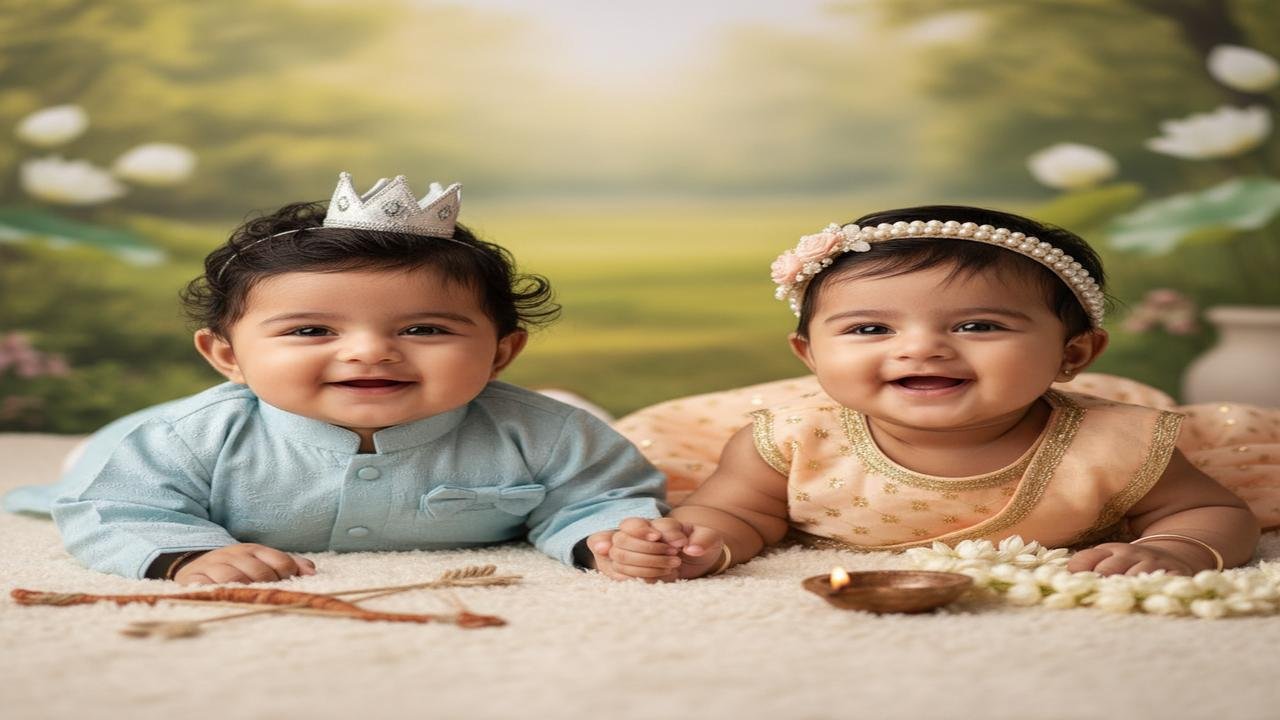
Why choose Rāma and Sītā for twins?
Rāma (Rama) and Sītā (Sita) are among the best-known divine figures in South Asia. In the classical epic the Rāmāyaṇa ascribed to Vālmīki, Rāma is the prince who follows his duty (dharma — ethical duty) through exile and trial, while Sītā is his consort, often read as an exemplar of fidelity, courage and household sovereignty. In Vaiṣṇava traditions Rāma is regarded as an avatāra of Viṣṇu; in other lines of thought he is revered as an ideal king and teacher. Choosing these names for twins signals a wish for complementary virtues — courage and compassion, public duty and domestic resilience — while also connecting the children to a deep cultural story.
Meanings and cultural resonances
- Rāma — commonly translated as “pleasing” or “delight,” also connected etymologically to joy and the root ram. Rāma is celebrated for his moral steadfastness, kingly conduct, and role as an obedient son and dutiful husband.
- Sītā — literally “furrow” (from sīta), symbolically linked to earth, fertility and sustenance; Sītā is also identified with Lakṣmī (the goddess of prosperity) in many texts. She embodies endurance, purity in some readings, and agency in others.
Different religious and literary traditions emphasize different aspects. For example, Tulasīdās’s Rāmacaritamānasa foregrounds bhakti (devotion), while modern retellings often highlight Sītā’s inner strength and autonomy. Acknowledging this interpretive variety helps parents choose names that match the values they wish to celebrate.
Regional forms, spellings and pronunciations
- Rāma / Rama / Ram: Rāma (with diacritic) indicates the long vowel in scholarly transliteration; common spellings in everyday use include Rama or Ram. Regional nicknames: Ramu, Raman, Ramji.
- Sītā / Sita / Seeta / Siya: Sītā’s name appears as Sita or Seeta in many Indian languages; Siya is a familiar, colloquial form used in Hindi and other languages. Regional epithets include Janaki (daughter of Janaka), Maithili (of Mithila).
Practical name-pair ideas for twins
Below are grouped suggestions for parents who want to preserve the Rāma–Sītā pairing while adapting it to contemporary tastes or family traditions.
- Traditional pair: Rāma & Sītā — clear, classical, instantly legible across many Indian contexts.
- Regional/vernacular: Ram & Siya; Rama & Janaki; Ram & Seeta.
- Expanded modern combos: Raman & Sita; Ramendra & Sitara (blending traditional root + modern suffixes).
- Paired full names (first + middle): Ram Anirudh & Sita Lakshmi; Raghuram & Janaki Priya — these can honour family deities or relatives while keeping the divine pair visible.
- Nicknames and diminutives: Ram / Ramu / Raman; Siya / Sita / Seetu — useful in daily life to avoid repetition if there are many children with similar classical names in a locality.
Same-gender or gender-neutral approaches
If twins are same-sex or you prefer gender-neutral naming, you can keep the thematic link without strict gender pairing:
- Raman & Ramya (both derive from ram)
- Sitaram & Ramsevak (compound names that place both figures together)
- Use Rāma and Sītā as middle names for either child to retain the spiritual connection while giving each child an independent given name.
Ritual, ceremony and social considerations
Many Hindu families perform a namakarana (naming ceremony) soon after birth; traditions differ about timing, mantras and who presides. Some consult a jyotiṣa (astrologer) to pick syllables that match the child’s horoscope; others choose based on sound, meaning or family lineage. Both approaches are culturally respectable — the important piece is that the name fits the family’s intention and the child’s lived environment.
Rāma and Sītā are also tied to festival calendars: Rāma’s birth is celebrated on Rāma Navami, observed on the Navami tithi (ninth day) of the bright half of Chaitra, and Sītā is honoured alongside Rāma at many such observances. Families who wish to align ceremonies with these dates often consult local panchānga (almanac) for the appropriate tithi and muhurta.
Respectful and contemporary use
- Remember the cultural weight — these are names with devotional and communal resonance. Using them thoughtfully is a way to honour tradition rather than reduce it to a fashion statement.
- Be aware of local sensitivities when combining divine names with informal nicknames; some communities prefer to keep deity names in full for ritual contexts.
- If choosing a compound or modern variant, test how it sounds in daily use and how it will age into adulthood — many families prefer a classical name for formal documents and a softer nickname for everyday life.
Final note
Choosing Rāma and Sītā for twins ties a family to one of the richest narrative streams in South Asia. Whether you prefer the classical Rāma–Sītā pairing, vernacular forms like Ram and Siya, or modern adaptations, aim for names that reflect both personal meaning and cultural respect. If following ritual timing or astrological guidance, consult knowledgeable local practitioners; otherwise, deciding on sound, family connection and the virtues you wish to inspire is a time-honoured and perfectly valid way to name your children.
