
Unique Baby Names Directly From the Shiva Purana

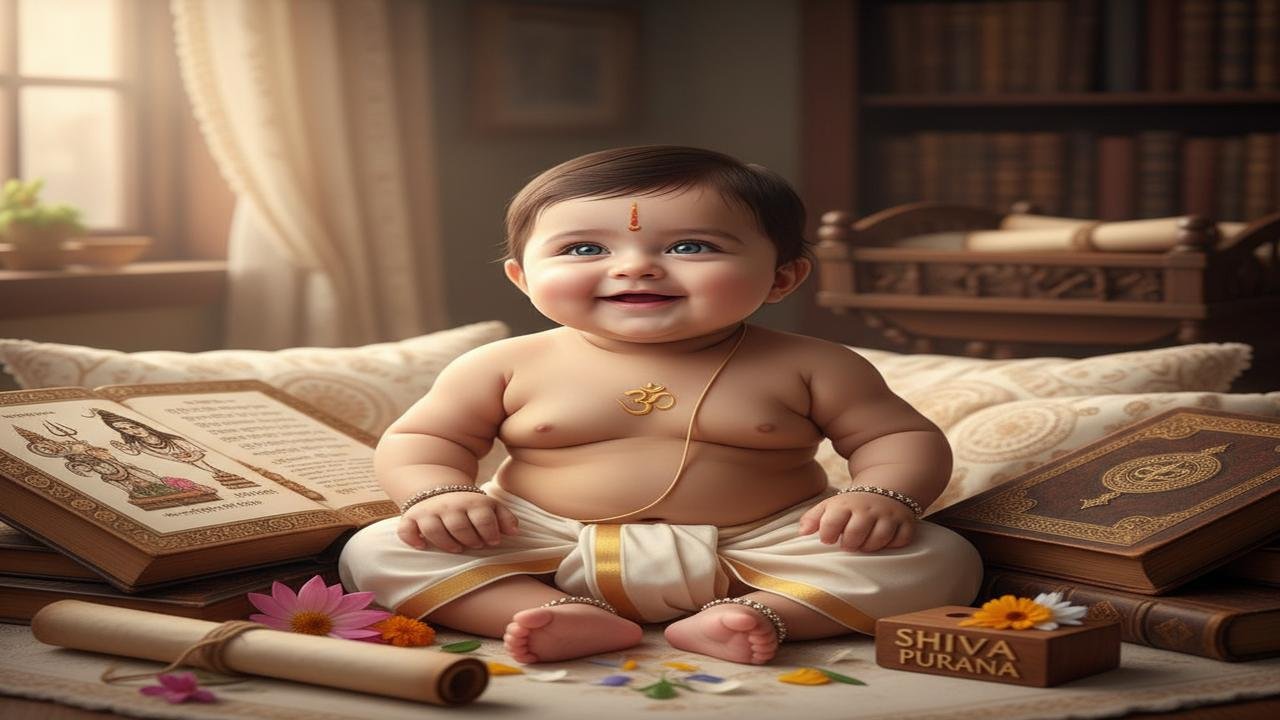
Why choose a name from the Shiva Purana?
The Shiva Purana is one of the major Puranic texts centred on Shiva — his myths, manifestations and devotees. It survives in multiple recensions and contains stories, hymns and symbolic images that have shaped Śaiva culture for centuries. Drawing a baby name from this Purana links the child to a living tradition: to a particular story, attribute or divine role rather than only to a modern-sounding word.
Different communities read the Purana differently. Where I note a character or epithet appears in the Purana, editions and chapter numbering can vary; for verse-level citation consult a critical edition or a Sanskrit scholar if precise sourcing matters.
How I selected these names
- Preference for names that occur in Shiva-centred narratives (epithets, sages, forms, attendants and related personages).
- Meanings kept short and practical — helpful for everyday use as well as ritual contexts.
- Notes on gender are suggestions only: many Sanskrit names are flexible or become gendered by local usage.
Names from the Shiva Purana — grouped and explained
Boys / masculine-leaning
- Bhairava — “terrible” or “formidable”; a fierce guardian form of Shiva associated with protection and the cutting of ego. (Puranic myths and tantric sections)
- Rudra — “the roarer” or Vedic storm/divine-healer; a primary Vedic name adopted by Shiva in the Purana.
- Shambhu — “giver of happiness”; a commonly used epithet of Shiva found throughout Puranic hymns.
- Tripurantaka — “destroyer of the three cities”; a warrior epithet recalling the story in which Shiva destroys the three rakshasa fortresses.
- Skanda / Kartikeya — the war-god son of Shiva and Parvati, commander of divine forces.
- Gananatha — “leader of the ganas” (gods/attendants); a respectful compound often used for Shiva or Ganesha in Puranic lists.
Girls / feminine-leaning
- Uma — an ancient name of Parvati used across Puranic narratives; suggests gentleness and spiritual strength.
- Gauri — “the fair/sacred one”; a common Purana name for Parvati emphasizing auspiciousness and harmony.
- Shailaja — “daughter of the mountain” (Shailaja = Parvati as daughter of Himavat); evocative and regional-friendly.
- Krittika — name connected to the six nymphs (the Krittikas) who fostered Kartikeya; also the name of a nakshatra.
- Anasuya — a virtuous woman in Puranic lore whose steadiness appears in various mythic cycles; used less commonly than other Purana names.
Unisex / conceptual / attribute names
- Ardhanari / Ardhanarishvara (short form: Ardhani) — “half-woman, half-man”; the fused Shiva–Parvati form symbolising unity of principles. Works as a modern, gender-fluid choice.
- Nataraja — “king of dance”; Shiva as the cosmic dancer. Often used respectfully as a masculine name but increasingly adapted creatively.
- Nandi — name of Shiva’s bull and gate-guardian; a familiar name that carries protective connotations.
- Chandrasekhara — “one who wears the moon”; an epithet for Shiva that translates well into modern usage (Chandra as a short form).
Sages, devotees and lesser-known figures
- Bhringi — a devotee-sage who famously circled only Shiva and resisted Parvati’s claim to union; a short, distinctive name with a Puranic anecdote behind it.
- Markandeya — a young devotee saved by Shiva from death; traditionally associated with intense devotion (bhakti) and blessing.
- Jalandhara — an asura-figure appearing in Shiva-related battles; bold and uncommon as a personal name.
- Bhasma / Bhasmaka — “ash” or “one who is smeared with ash”; evocative as a symbolic name though rare in everyday use.
Quick reference table
| Name | Meaning / gloss | Context |
|---|---|---|
| Bhairava | Fierce guardian form of Shiva | Puranic/tantric narratives |
| Ardhanarishvara | Half-man, half-woman form | Symbolic union in Shiva lore |
| Uma | Parvati; gentle, divine | Parvati’s name across Puranas |
| Bhringi | Devotee-sage who circled Shiva | Purana anecdote emphasizing singular devotion |
| Tripurantaka | Destroyer of three cities | Shiva’s warrior epithet |
Practical notes on choosing and using a Purana name
- Respect tradition: many of these names are theonyms or epithets of gods. Families vary in how they use them — as main names, middle names or pet names.
- Nakshatra and family custom: Hindu naming often follows the child’s nakshatra (lunar mansion) and local custom; the Purana name can sit alongside such traditions.
- Pronunciation and modern usability: consider short forms and how the name fares in everyday speech and documents.
- Verify textual details if scholarly accuracy matters: the Shiva Purana exists in multiple manuscripts; chapter numbering differs across editions.
Closing thought
Names from the Shiva Purana offer a bridge between mythic imagination and lived family tradition. They carry stories — of guardianship, paradox, devotion and cosmic play. If you plan a ritual naming (nāmakaraṇa) or a modern civil name, discuss choices with family elders and, if you wish, a temple priest or Sanskrit reader to match the name’s intent with community norms.
