
10 Baby Boy Names meaning ‘Charioteer’, inspired by Krishna’s role

Why charioteer names, and where they come from
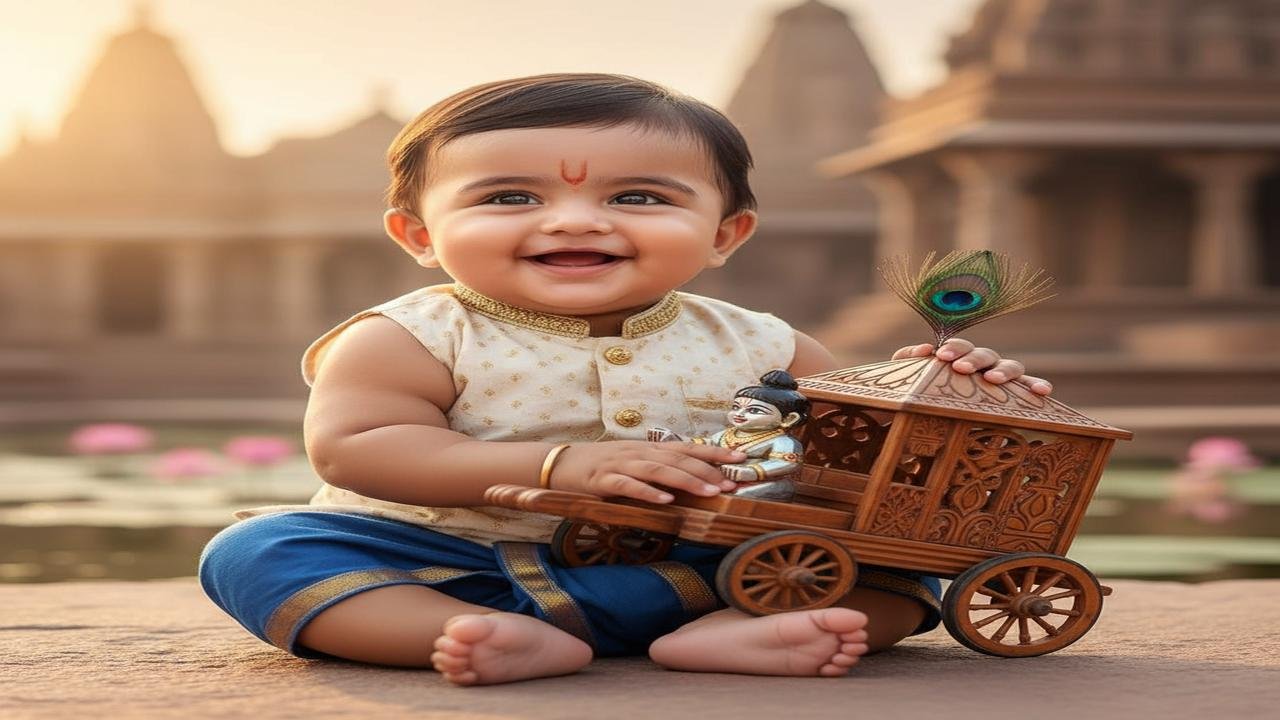
Krishna’s role as the charioteer of Arjuna is one of the most enduring images in Hindu tradition. The scene on Kurukṣetra — where the Bhagavad Gītā (part of the Mahābhārata) is spoken from the chariot — has made the Sanskrit word sārathi (सारथि) a powerful symbol: guide, steady companion, and the one who steers when the path is uncertain. Here dharma — duty or right action — is a helpful gloss for that ethical dimension.
Below are ten boy-names that either literally mean “charioteer” in Sanskrit or are devotional compounds inspired by Krishna’s charioteer role. I note linguistic roots, common variants, and short cultural pointers; when a name is a modern devotional compound rather than a classical noun, I say so. India’s naming practices vary by region and community, so take these as options rather than prescriptions.
Ten names meaning or inspired by “charioteer”
-
Sārathi / Saarathi — सारथि
Meaning: “charioteer,” driver. Pronunciation: SAH-rah-thee.
Note: The most direct single-word name from Sanskrit. Widely used in South and South‑East India as a given name; also appears in devotional contexts referring to Krishna as the friend and guide who steers life’s chariot. -
Parthasārathi / Parthasarathi — पार्थसारथि
Meaning: “charioteer of Partha (Arjuna).” Pronunciation: PAR-tha-SAH-rah-thee.
Note: A devotional epithet used across Vaiṣṇava traditions. Partha is a patronymic for Arjuna; the compound is a common temple-name and modern given name, especially where Krishna’s Gītā role is emphasised. -
Sarath / Sarath (regional spellings)
Meaning: Short form or regional variant of Sārathi; used widely in South India and Sri Lanka. Pronunciation: SAH-rath or SAH-ruth (varies).
Note: Be aware of similar-looking names like “Sharath/Sharad” which have distinct roots and meanings (e.g., relating to autumn). Context and spelling matter. -
Rathin / Rāthin — रथिन्
Meaning: “one of a chariot” / charioteer (classical/poetic use). Pronunciation: RAH-thin.
Note: Found as a modern Bengali and Odia name. It carries a slightly literary flavour and appears in regional name-lists. -
Rāthī / Rathi (with care) — रथी
Meaning: As rāthī, can mean “charioteer” or “rider.” Pronunciation: RAA-thee.
Note: This word is a homograph in modern Indian languages: “Rathi” (without long ā) can also be read as रति (love, delight). If choosing this form, check local pronunciation to avoid confusion. -
Sārathya — सारथ्य
Meaning: “the quality or skill of being a charioteer”; by extension, “one who guides.” Pronunciation: SAH-rah-thya.
Note: More abstract and less common as a given name, but attractive for parents who want the charioteer metaphor (guide, steady hand) rather than a literal occupational label. -
Sārathin — सारथिन्
Meaning: Poetic/archaic form related to Sārathi — “driver.” Pronunciation: SAH-rah-thin.
Note: Rare in present-day use but encountered in classical Sanskrit poetry and modern Sanskrit-derived names. -
Dharma‑sārathi / Dharmasarathi — धर्मसारथि
Meaning: “charioteer of dharma” (i.e., one who steers according to duty). Pronunciation: DHAR-ma-SAH-rah-thee.
Note: A devotional compound more than an ancient proper name. It is used in contemporary contexts to highlight Krishna’s role as moral guide; some families prefer such compounds for their explicit ethical nuance. -
Ratha‑mitra / Rathamitra — रथमित्र
Meaning: “friend of the chariot” or “companion on the chariot.” Pronunciation: RAH-tha-MEE-tra.
Note: A rarer, more Sanskritized compound that can work as a unique given name. It evokes companionship and service rather than the technical role of driving. -
Krishna‑sārathi / Krishnasarathi
Meaning: A devotional compound: “Krishna, the charioteer” or “one like Krishna the charioteer.” Pronunciation: KRISH-na‑SAH‑rah‑thee.
Note: Explicitly devotional and modern in usage. Families who wish to honour Krishna’s guidance in life sometimes adopt such compounds; be mindful of length and how it fits with surnames and initials.
Practical naming notes
- Short vs compound: Single-word names (Sārathi, Rathin) are easy across languages; devotional compounds (Parthasarathi, Dharmasarathi) carry extra religious meaning but can be long.
- Pronunciation and script: Spellings vary (Saarathi, Sarathi, Sarath). Confirm pronunciation in the family language to avoid unintended shifts in meaning.
- Community context: Parthasarathi and Krishna compounds are especially popular in Vaiṣṇava communities and devotional families; secular usage is also common but be mindful of local preferences.
- Initials and legal forms: Consider how a longer compound will shorten into initials and how it looks in official documents.
A note on meaning and interpretation
Words like sārathi can carry both literal and symbolic senses: a practical driver, and a spiritual guide. Different traditions emphasise different aspects — in Śaiva or Smārta homes the practical meaning may appeal, while Vaiṣṇava devotees often choose the name for its connection to Krishna’s teaching in the Gītā. All these choices are valid; the important thing is the intention behind the name.
If you want help narrowing the list to two or three options that match your language, family tradition and modern usability (nicknames, initials), tell me your region and preferred length and I’ll refine suggestions.
