
10 Modern-sounding Baby Names for Girls inspired by Goddess Durga

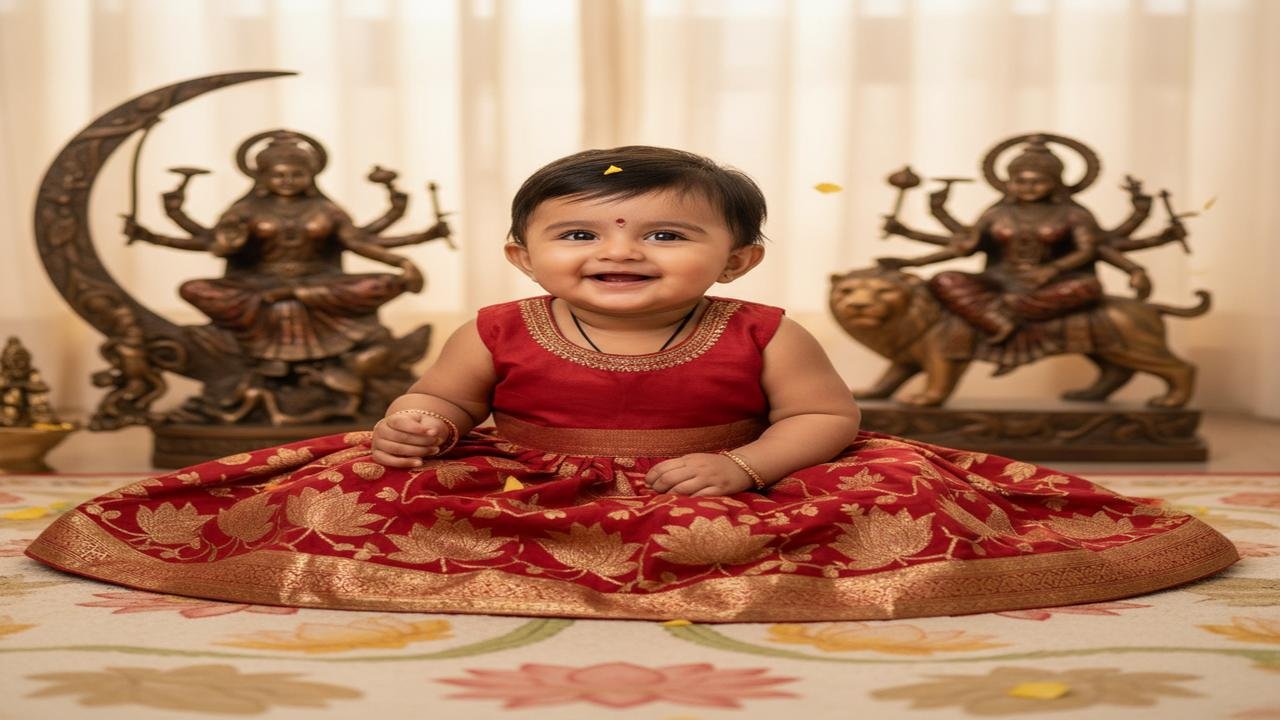
Why choose a Durga-inspired name?
Goddess Durga stands at the centre of many Hindu devotional and philosophical streams as a symbol of power, protection and compassionate motherhood. The word Shakti — creative and empowering energy — is often used to describe her. Different texts and traditions emphasise different aspects: in the Devi Mahatmya (part of the Markandeya Purana) she is the slayer of demons; in Puranic and local traditions she is a mother, warrior, and sovereign. The names below draw on that wide vocabulary of power, care and victory, and are presented as modern-sounding options suitable for girls while respecting their sacred roots.
How this list was made
Each name includes a simple pronunciation guide, a concise meaning, and a short note linking it to Durga or to Shakta/Smarta traditions. Where a name appears across sects, that diversity is noted. My aim is to be accurate and humble about interpretation: devotional use and local stories can differ, and families may prefer one understanding over another.
Ten modern-sounding names inspired by Goddess Durga
-
Ambika (um-BEE-kah) — “mother, little goddess.”
Meaning and source: Ambika derives from Amba, a common epithet for the Mother Goddess found in the Devi Mahatmya and many Puranic hymns. It is warm, traditional yet very usable today. Nicknames: Ami, Anu.
-
Bhavani (bha-VAH-nee) — “giver of existence / life-giver.”
Meaning and source: Bhavani is an epithet commonly applied to Durga/Parvati in Marathi and other regional traditions (the Tuljapur Bhavani is a famous shrine). The name carries a strong devotional history and reads as contemporary in sound. Nicknames: Bhavi.
-
Ishani (ih-SHAH-nee) — “belonging to Ishana (Shiva); goddess.”
Meaning and source: Ishani appears as an epithet of the Goddess as consort of Shiva in many Puranic lists and stotras. It’s short, elegant and common in modern India. Note: many Hindus use Ishani to signify Parvati/Durga’s connection to Shiva; that inclusive meaning is widely accepted across traditions.
-
Lalita (lah-LEE-tah) — “playful, gentle.”
Meaning and source: Lalita is central to Shakta liturgy (Lalita Tripurasundari). While Lalita is a distinct goddess in Sri Vidya texts, she is often devotionaly identified with the great Goddess in broader contexts. The name feels classical and contemporary at once. Nicknames: Lali, Lita.
-
Katyayani (ka-tyaa-YUH-nee) — “daughter of sage Katyayana.”
Meaning and source: Katyayani is one of the Navadurga forms traditionally worshipped on the sixth day of Navaratri in many regions. It is slightly longer but can be shortened affectionately to Kaya or Katy, which read as modern nicknames.
-
Chandrika (chan-DREE-kah) — “moonlight.”
Meaning and source: While Chandika/Chandi is the fierce form of the Goddess featured in the Devi Mahatmya, Chandrika offers a softer, lyrical option inspired by that root. It is widely used and carries a poetic quality. Nicknames: Chandi, Rika.
-
Jaya (JAH-yah) — “victory.”
Meaning and source: Jaya and its variant Vijaya are directly tied to the Goddess as victor over demonic forces in many Puranic narratives and in the hymns of Devi Mahatmya. Jaya is succinct and internationally familiar while remaining deeply rooted in Sanskritic usage.
-
Nandini (nun-DEE-nee) — “delighter, giver of joy.”
Meaning and source: Nandini appears across Hindu literature as a name for auspicious female beings. In some local recensions the Goddess is invoked with this epithet. It is gentle, friendly and popular as a modern given name. Nicknames: Nandi, Nandu.
-
Shivani (shi-VAH-nee) — “belonging to Shiva.”
Meaning and source: Shivani underscores the Goddess’s relationship with Shiva; in many traditions Durga is understood as Parvati, Shiva’s shakti. Shivani is familiar and contemporary, especially in urban usage, and carries both tenderness and strength.
-
Durga (DUR-gah) — “the inaccessible; invincible.”
Meaning and source: The name itself is timeless. Durga is used widely across India and in many languages. While explicitly devotional, Durga also functions as a given name with a strong, dignified presence. Short forms: Duru, Gauri (used cautiously as distinct name with its own roots).
Naming etiquette and cultural sensitivity
Choosing a name from devotional sources carries cultural and religious weight. A few practical points to consider:
- Family and regional traditions: Ask elders about lineage preferences (some communities use a family deity or kuladevata naming practice).
- Pronunciation and script: Decide on a standard Roman spelling and, if needed, the Devanagari/Regional script version for official documents to preserve pronunciation.
- Avoid trivialisation: Sacred epithets are used in worship; consider whether the family wishes a distinctly devotional name or a secular-sounding variant.
- Consultation: If you follow astrological naming practices (nāma-karana tied to the birth tithi or nakshatra), consult your priest or family astrologer—this is a cultural choice rather than a requirement.
Final note
Each name above connects in different ways to the many faces of the Goddess—warrior, mother, playful beauty, victorious power. In Śākta texts the emphasis may be on cosmic power; in Smārta and Vaiṣṇava contexts the same names may be read as Parvati or consort-forms. Choosing a name can be both a personal aesthetic decision and a way to acknowledge living religious traditions. Whatever you choose, a short conversation with family and, if relevant, community elders will help place the name respectfully within your home’s cultural framework.
